
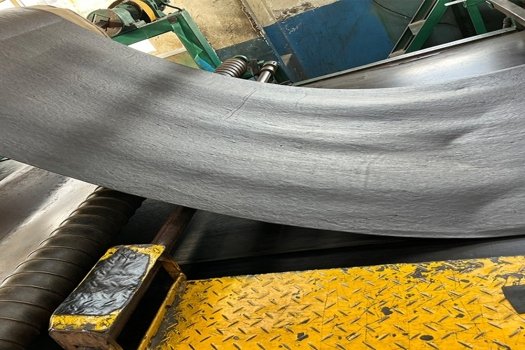
Rubber conveyor belts move bulk materials through mines, quarries, cement plants, steelworks and ports. The right belt depends on the material, conveyor design and operating conditions. A belt suitable for one duty is not automatically suitable for another.
Mining and Quarrying
Crushed rock, sand and ore can cause cover wear, impact damage and cuts at loading points. Belt selection should consider material size, drop height, throughput, conveyor length and pulley diameters, together with the condition of chutes and impact supports.
Fabric-reinforced belts are used for many bulk-handling duties. Steel cord conveyor belts are an option for applications requiring high belt tension. Carcass strength and cover thickness should be calculated for the conveyor rather than selected from belt width alone.
Cement, Steel and Hot-material Handling
Clinker, sinter and other hot materials require careful assessment of the cover compound and carcass. Record both continuous and peak material temperatures, particle size, loading pattern and cooling conditions. Material temperature and belt surface temperature are different selection inputs.
Discuss the actual duty when specifying a heat-resistant conveyor belt. General-purpose rubber belts should not be assumed suitable for hot material.
Ports and Bulk Terminals
Port conveyors handle coal, ore, aggregates and other bulk cargoes. Important factors include conveying capacity, belt tension, abrasion, outdoor exposure and the number of transfer points. Confirm cover properties and belt construction against the cargo and conveyor design.
Coal Handling and Flame-retardant Requirements
Coal applications may require flame-retardant and electrical-resistance properties. Underground duties can have specific approval and testing requirements. Anti-static properties alone do not establish fire safety or prevent all dust-explosion risks.
Compare the required specification with the offered flame-retardant belt or PVC/PVG solid woven belt, including the relevant test reports and permitted application.
Recycling and Chemical-material Handling
Recycling plants may expose belts to sharp pieces, oils and variable loads. Chemical-material handling requires the chemical name, concentration, temperature and contact duration to be identified. Acid- and alkali-resistant belts are selected for defined exposure conditions; chemical resistance is not universal.
Information Needed to Select a Belt
- Conveyed material: type, particle size, temperature, moisture and any oil or chemical exposure.
- Conveyor: length, incline, belt speed, throughput, pulley diameters and loading conditions.
- Belt construction: width, strength rating, ply count or steel cord construction, and top/bottom cover thicknesses.
- Performance: abrasion, impact, heat, oil or flame-retardant requirements and the agreed test standard.
- Supply: total length, roll lengths, edge type, splice requirements and destination port.
Food-contact, pharmaceutical and precision electronics conveyors require application-specific materials and evidence of suitability. The use of a rubber belt does not by itself establish food-contact, hygiene or electrical-safety compliance.
Discuss Your Conveyor Belt Requirements
EVER JOY supplies industrial conveyor belts with specification review and export support. Send your existing belt marking, operating conditions and required quantity through our quotation form or email info@everjoyconveyor.com. Final construction and performance requirements should be agreed in the quotation and order specification.
 English
 Spanish