
EVER JOY / INDUSTRIAL CONVEYOR BELTING
Acid & Alkali Resistant Conveyor Belt
Chemical-resistant covers | EP/NN textile carcass | Industrial bulk handling
Chemical and mineral processing — Minerals, filter cake and bulk solids exposed to acids/alkalis
Pulp, paper and environmental handling — Alkaline fiber, filter residues, sludge and process solids
1. Product overview and key advantages
Designed for continuous handling of acidic or alkaline solids and contaminated bulk materials in fertilizer, chemical, mineral-processing and paper industries. Cover compound and belt construction are selected against the actual chemicals, concentration, temperature and mechanical duty.
EVER JOY acid and alkali resistant conveyor belting combines a chemical-compatible rubber cover, an EP or NN fabric carcass and inter-ply bonding rubber. It can be specified for blocks, granules, powders and packaged products exposed to acidic or alkaline substances. Belt selection considers chemical contact as well as abrasion, flexibility, tensile strength and reliable splicing; the phrase “chemical resistant” by itself is not a universal compatibility guarantee.
- Rubber cover selected for acidic or alkaline material-contact conditions
- A1/A2/A3 test-media grades can be included in the purchase specification
- EP/NN multi-ply carcass selected for rated belt strength and troughing duty
- Configurable cover thicknesses, belt width, roll length and splice arrangement
- Acceptance tests can be agreed for the actual chemical medium and exposure
2. Typical applications and limits
| Application | Typical material | Selection focus |
|---|---|---|
| Fertilizer and phosphate processing | Acidic wet solids, salts and chemically contaminated granules | Identify chemical species, concentration and moisture |
| Chemical and mineral processing | Minerals, filter cake and bulk solids exposed to acids/alkalis | Assess abrasion, impact and temperature |
| Pulp, paper and environmental handling | Alkaline fiber, filter residues, sludge and process solids | Check caustic concentration, wash liquids and contact time |
| Metallurgy and other industries | Wet materials and chemically treated solids | Check oxidizers, heat and mixed chemicals |
This is conveyor belting for material handling, not a vessel or hose for prolonged immersion or liquid transfer. Organic solvents, strong oxidizers, hot concentrated acids, mixed chemicals and permanently submerged service require a dedicated compatibility review.
3. Belt structure: covers, plies and adhesion
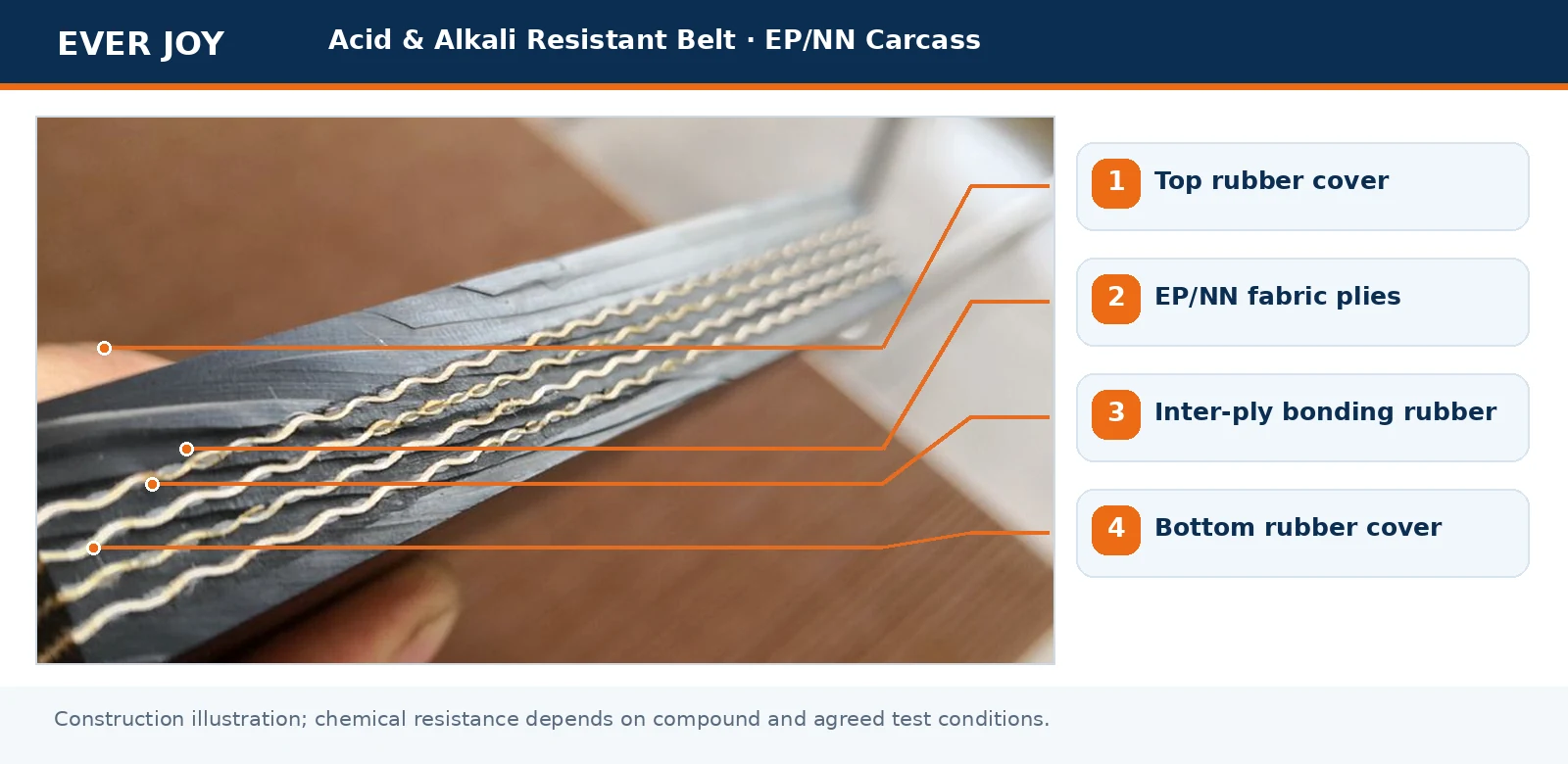
The carrying-side cover is the principal contact surface for chemicals and abrasion. The EP/NN fabric carcass carries the belt tension, while bonding rubber maintains adhesion between the plies and covers. The pulley-side cover protects the carcass and works against idlers and drums. Cover thickness and carcass construction should be chosen as a complete conveying system.
4. A1/A2/A3 chemical resistance classes and immersion tests
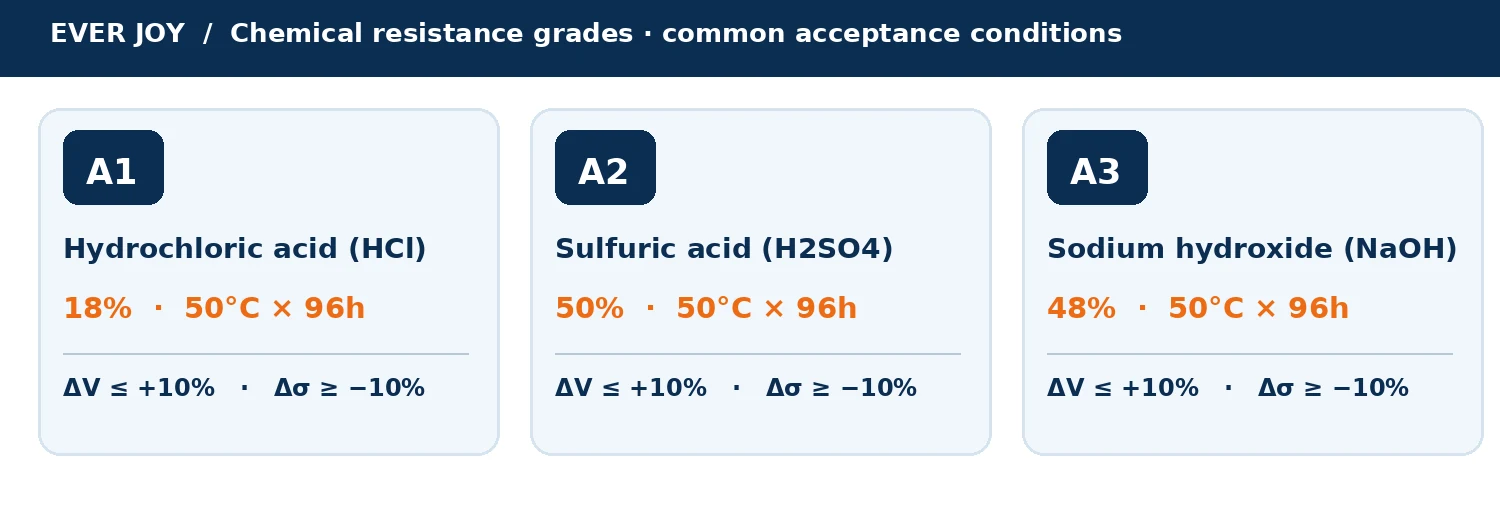
The following comparison conditions are widely used for HG/T 3782-series acid/alkali-resistant belt specifications. They help define a buyer’s test medium and acceptance criteria. Test-liquid concentration is not a universal allowable concentration for continuous service.
| Grade | Test liquid | Concentration | Immersion | Volume change | Tensile-strength change |
|---|---|---|---|---|---|
| A1 | Hydrochloric acid (HCl) | 18% | 50°C × 96 h | ≤ +10% | ≥ −10% |
| A2 | Sulfuric acid (H₂SO₄) | 50% | 50°C × 96 h | ≤ +10% | ≥ −10% |
| A3 | Sodium hydroxide (NaOH) | 48% | 50°C × 96 h | ≤ +10% | ≥ −10% |
“≥ −10%” means that the relative tensile-strength change must not be below −10% (no more than a 10% reduction). One class cannot prove compatibility with other acids, alkalis or mixed chemicals.
5. Cover-rubber properties and typical procurement targets
The following figures are commonly published comparison targets for acid/alkali-resistant belt cover rubber. They can be used when drafting a purchase specification, but the binding criteria must follow the agreed standard edition, test method, compound and order datasheet.
| Property | Typical procurement target | Remarks |
|---|---|---|
| Tensile strength, before ageing | ≥ 14 MPa | Cover-rubber specimen; relevant ISO 37 method |
| Elongation at break, before ageing | ≥ 400% | State sample and test conditions |
| Tensile strength, after ageing | ≥ 12 MPa | Specify ageing time and temperature |
| Elongation at break, after ageing | ≥ 340% | Ageing conditions must be stated |
| Abrasion volume loss | ≤ 250 mm³ | Agreed abrasion test method |
| Hardness, Shore A | Approx. 60 (+10/−5) | Pre-ageing comparison target |
6. Belt construction and ordering dimensions
EP denotes polyester/polyamide fabric and NN denotes nylon/nylon fabric. Finished-belt rating is specified in N/mm: for example, EP400/4 means 400 N/mm rated belt strength with four fabric plies. This must not be confused with the grade of one individual fabric ply.
| Item | Specify | Example / note |
|---|---|---|
| Carcass | EP or NN, finished belt rating (N/mm), ply count | e.g. EP400/4 or EP630/4 |
| Dimensions | Belt width, length, total thickness, roll length | e.g. 800 or 1,000 mm width |
| Cover rubber | Top/bottom cover thickness, resistance grade | e.g. 4+2 mm or 6+2 mm |
| Chemical duty | Medium, concentration, pH, normal/peak temperature | Continuous contamination vs intermittent washing |
| Conveyor | Lump size, abrasion, moisture, speed and incline | Pulley diameter, scraper and loading impact |
| Delivery | Quantity, roll arrangement, port, splice type | Open-ended or endless |
Model numbers and dimensions illustrate quotation formats rather than ready-stock availability. Suitable chemical class and supply dimensions are confirmed for each order. Maximum factory belt-production width is approximately 2,200 mm.
7. How to specify the correct chemical-resistant belt
01 Identify the medium: chemical names, working concentrations, pH, contact mode and cleaning solutions.
02 Record temperature and exposure: distinguish material and belt-surface temperature, normal operation and short peaks.
03 Set mechanical duty: tensile rating, plies, covers, abrasion, impact and pulley diameters.
04 Agree the chemical test: A1/A2/A3 or immersion in the actual process liquid with stated limits.
05 Confirm splices and delivery: splice method, packing, roll mass and destination port.
8. Product standards and test methods
| Reference | Purpose and limits |
|---|---|
| HG/T 3782-2015 | Chinese industrial product standard for textile-reinforced acid/alkali-resistant conveyor belts |
| ISO 1817:2026 | Immersion testing of vulcanized rubber in liquids; changes in mass, volume and properties |
| ISO 37:2024 | Tensile-strength and elongation testing for rubber |
| ISO 252:2023 | Belt cover-to-carcass and inter-ply adhesion test methods |
| ISO 283:2023 | Full-thickness textile conveyor-belt tensile testing |
| ISO 4649:2024 | Rubber drum-abrasion test; not a field-life guarantee |
| ISO 14890:2026 | General-use textile-belt purchasing reference; not proof of chemical resistance |
DIN, AS or GOST requirements may also be incorporated when specified by the buyer, after confirming each standard’s edition, scope and acceptance criteria. A test-method reference is not a certification of the complete belt.
9. Quality checks and technical documentation
| Item | Inspection / delivery details |
|---|---|
| Chemical immersion | Liquid identity, concentration, temperature, duration, volume change and retained tensile properties |
| Cover properties | Tensile strength, elongation, hardness, abrasion and ageing conditions |
| Belt integrity | Full-thickness strength, elongation, inter-ply adhesion, width and thickness |
| Traceability | Product marking, batch identification, test details and agreed datasheet |
| Shipment acceptance | Roll length, dimensions, weight, appearance, packing and shipping records |
Test and inspection documentation are defined in the purchase contract and arranged according to the actual product and test availability. Batch conformity is established by the relevant inspection records.
10. Manufacturing and export support
EVER JOY supports international industrial belt procurement. Our manufacturing facility is in Guzhen County, Bengbu, Anhui, China, with a site area of approximately 93,333 m² (140 mu) and aggregate daily belt-production capacity of around 20,000 metres. Specifications, inspection and export packing can be coordinated by order. Factory visits are welcome by appointment.
11. Frequently asked questions
01 Which is better: A1, A2 or A3?
They refer to different chemical test liquids, not a simple ascending ranking. Select by the actual acid or alkali in your process.
02 Does 50°C × 96 h immersion prove continuous service at 50°C?
No. A laboratory exposure result does not establish unrestricted operating temperature or lifetime.
03 Can one belt carry both acidic and alkaline materials?
Provide the actual chemicals, concentrations and alternating-contact or cleaning conditions so a common cover compound can be assessed.
04 Is an acid/alkali-resistant belt automatically oil- or solvent-resistant?
No. Fuels, aromatic solvents, ketones, esters and oxidizers can act on rubber differently and need separate assessment.
05 What does EP400/4 mean?
It identifies a finished belt rated at 400 N/mm and reinforced with four fabric plies; the chemical resistance grade and covers are specified separately.
06 Can thicker top cover rubber be selected?
Yes, subject to wear, chemical contact, impact and pulley dimensions. More thickness alone does not guarantee chemical compatibility.
07 Can third-party tests be arranged?
The purchase specification can define the tests, standard editions, sampling and agreed third-party inspection arrangements.
08 What is needed for a quotation?
Share width, length, finished-belt rating, plies, top/bottom covers, chemical medium and concentration, temperatures, quantity and destination; photos or drawings help.
12. Technical reference and order conditions
Chemical-class criteria and physical-property figures here describe specification and acceptance targets, not results for a particular production batch. The approved order datasheet and corresponding inspection evidence govern the supplied belt.
Discuss Your Belt Specification & Supply Requirements
Related Products
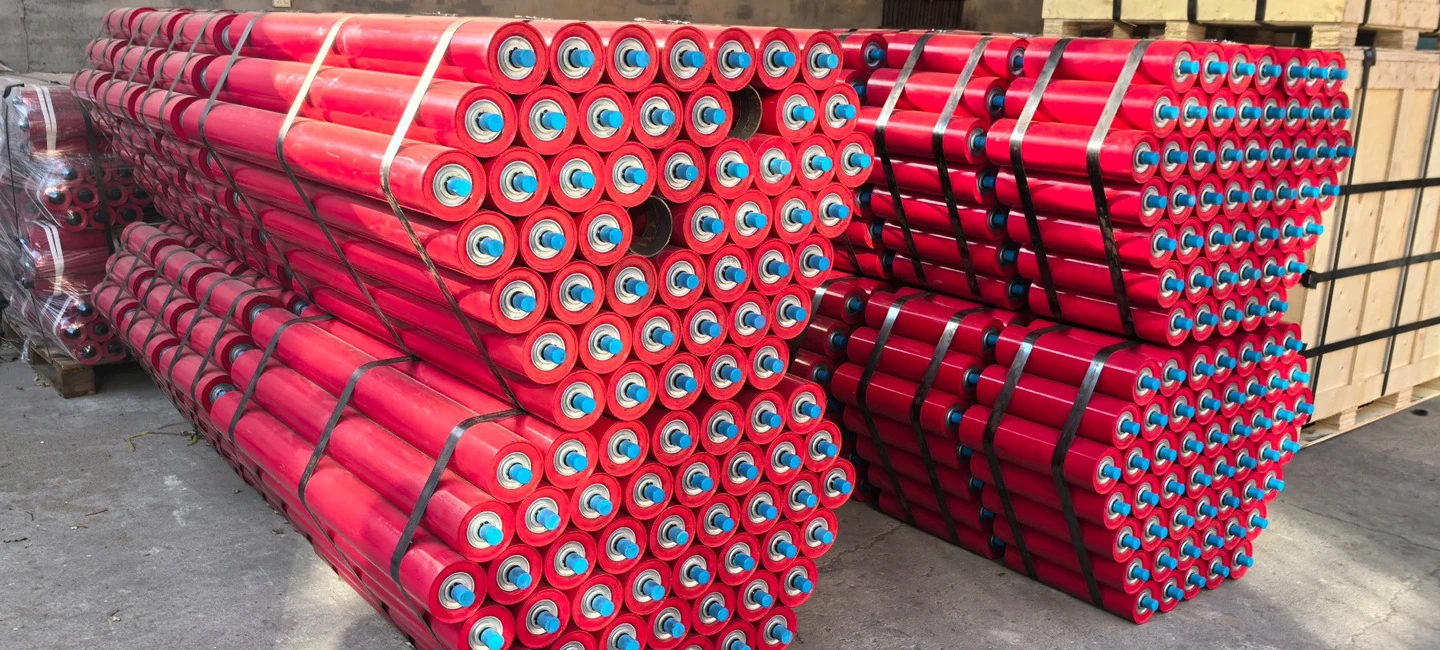 Conveyor Idlers & Idler Sets
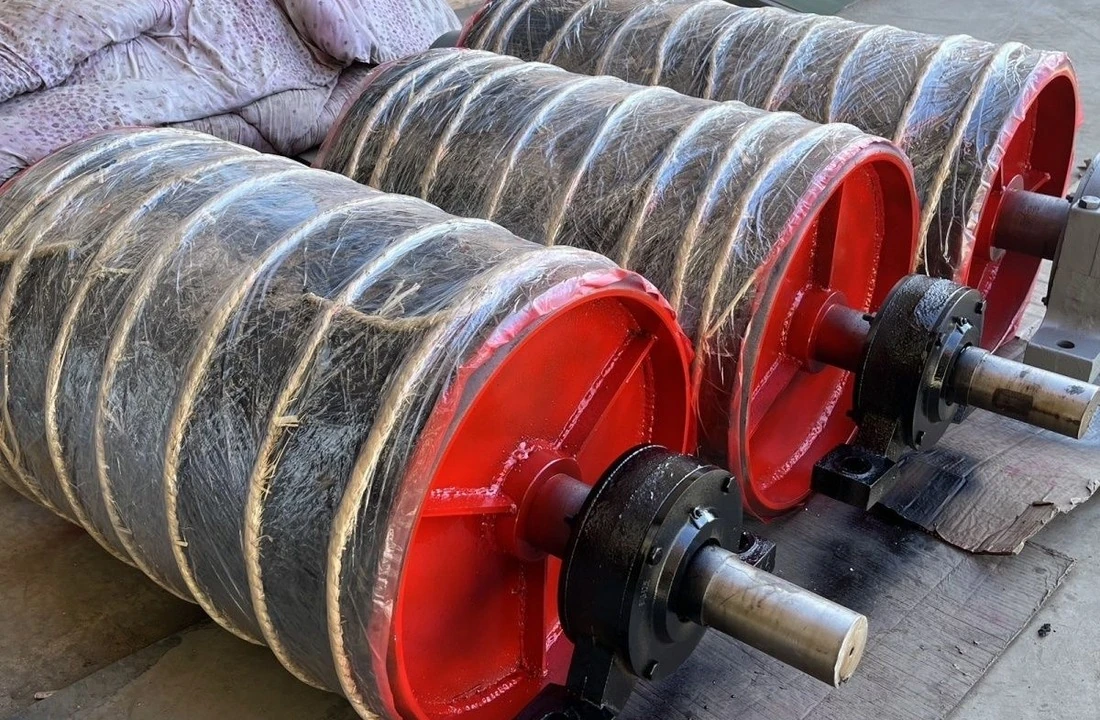 Conveyor Drum Pulleys
Explore other conveyor belts
Explore Our Conveyor Belts
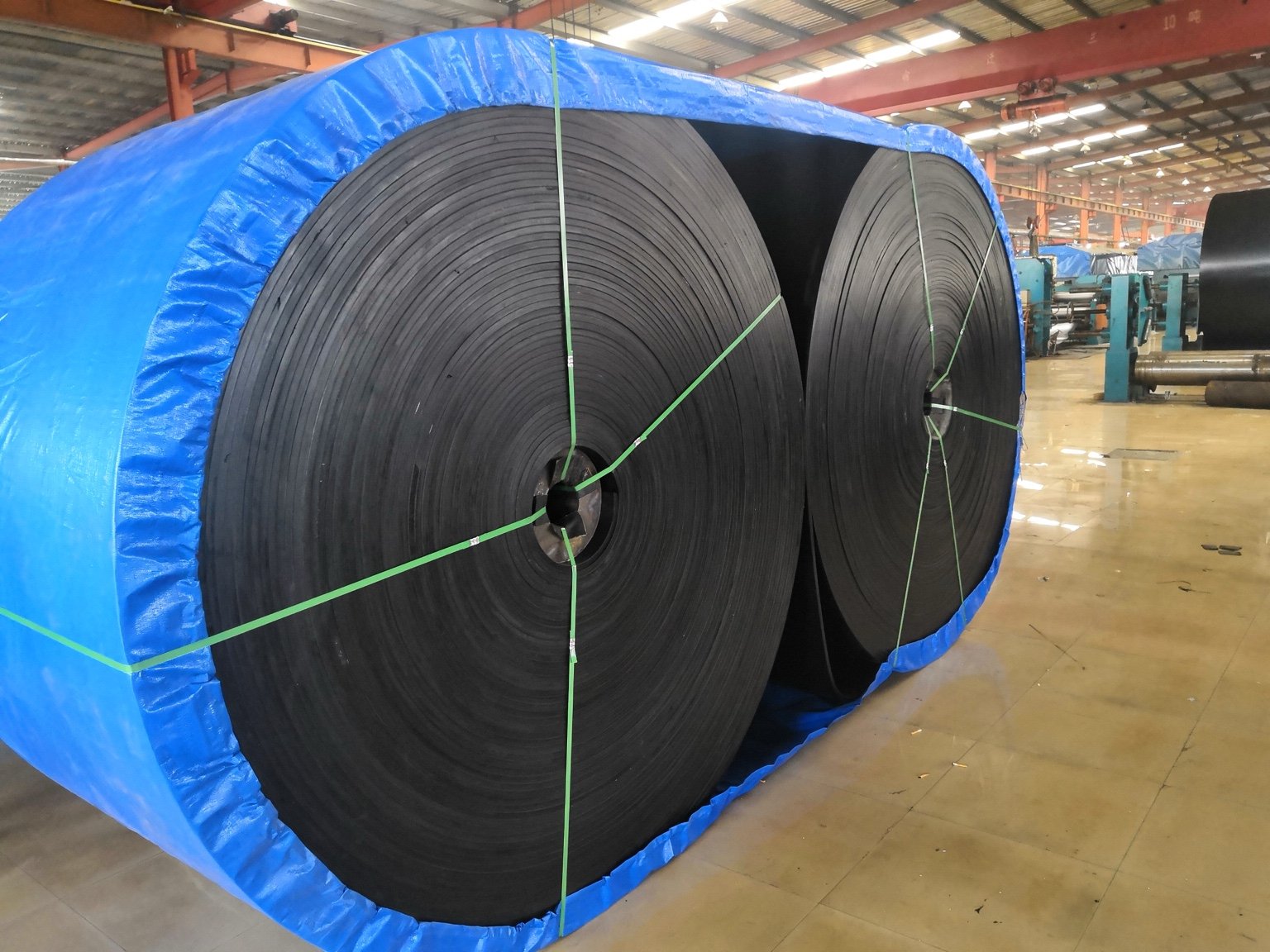
Acid and Alkali Resistant Conveyor Belt
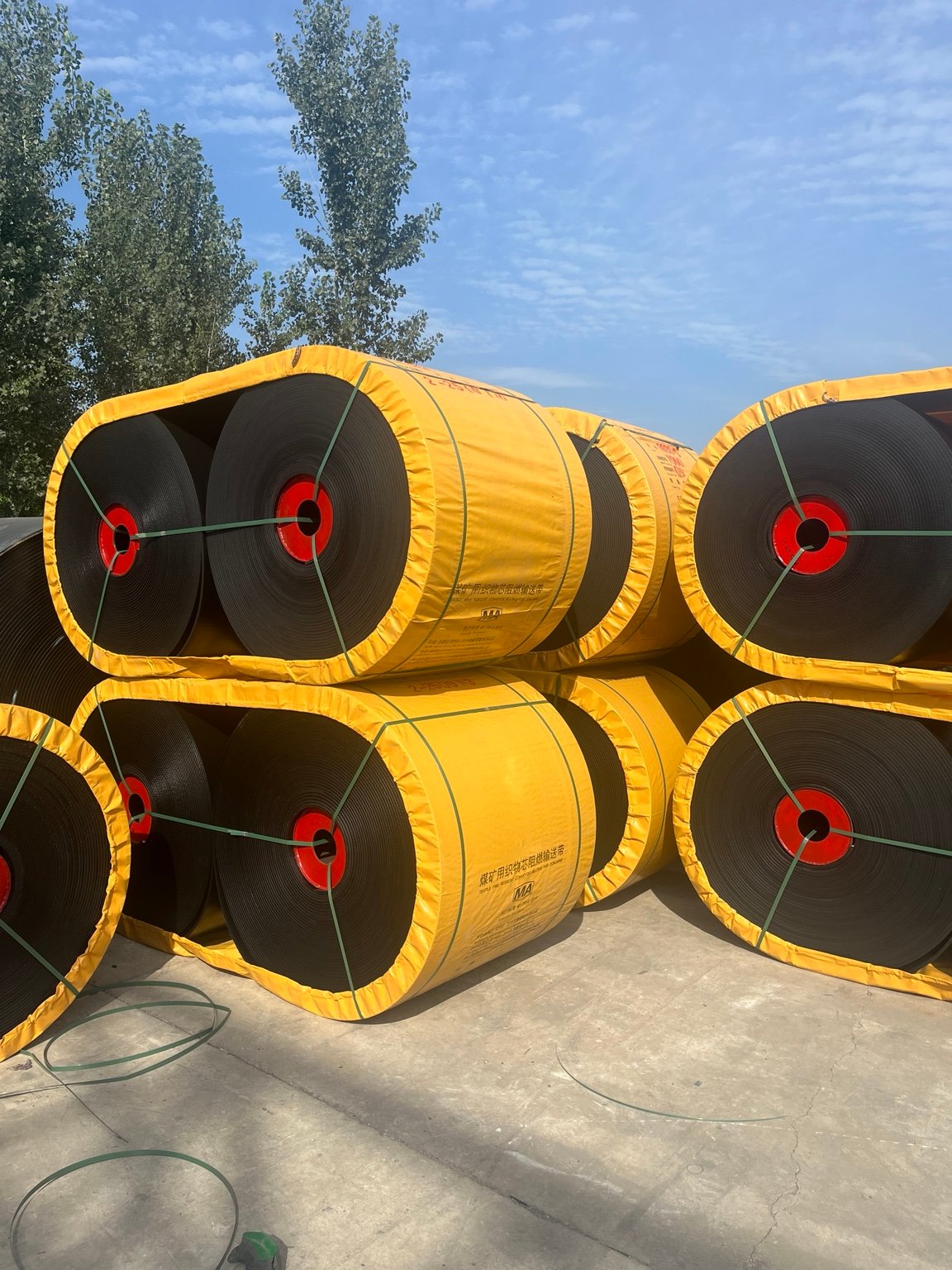
General Flame Retardant Conveyor Belt

Solid Core Flame Retardant Conveyor Belt for Coal Mine
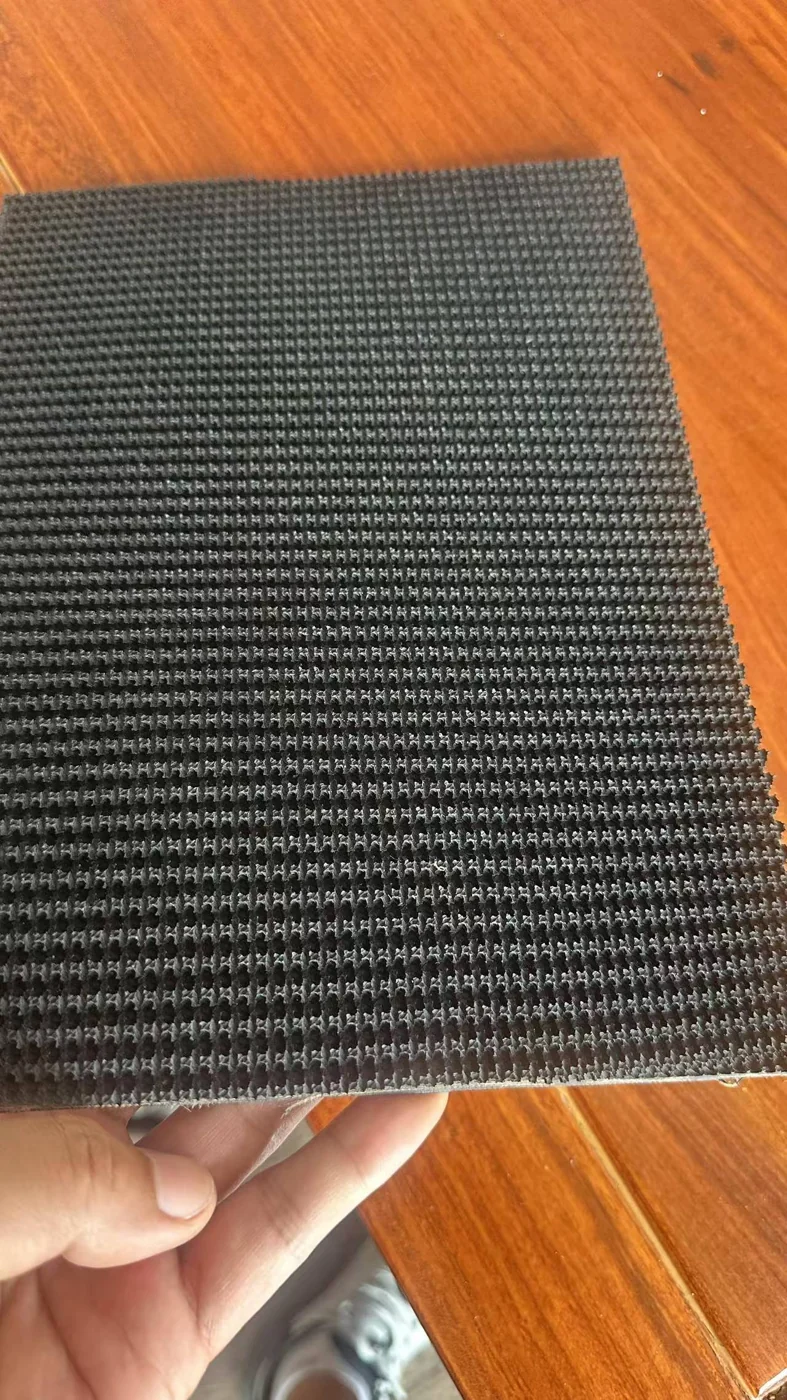
Magic Carpet Grass-pattern Conveyor Belt
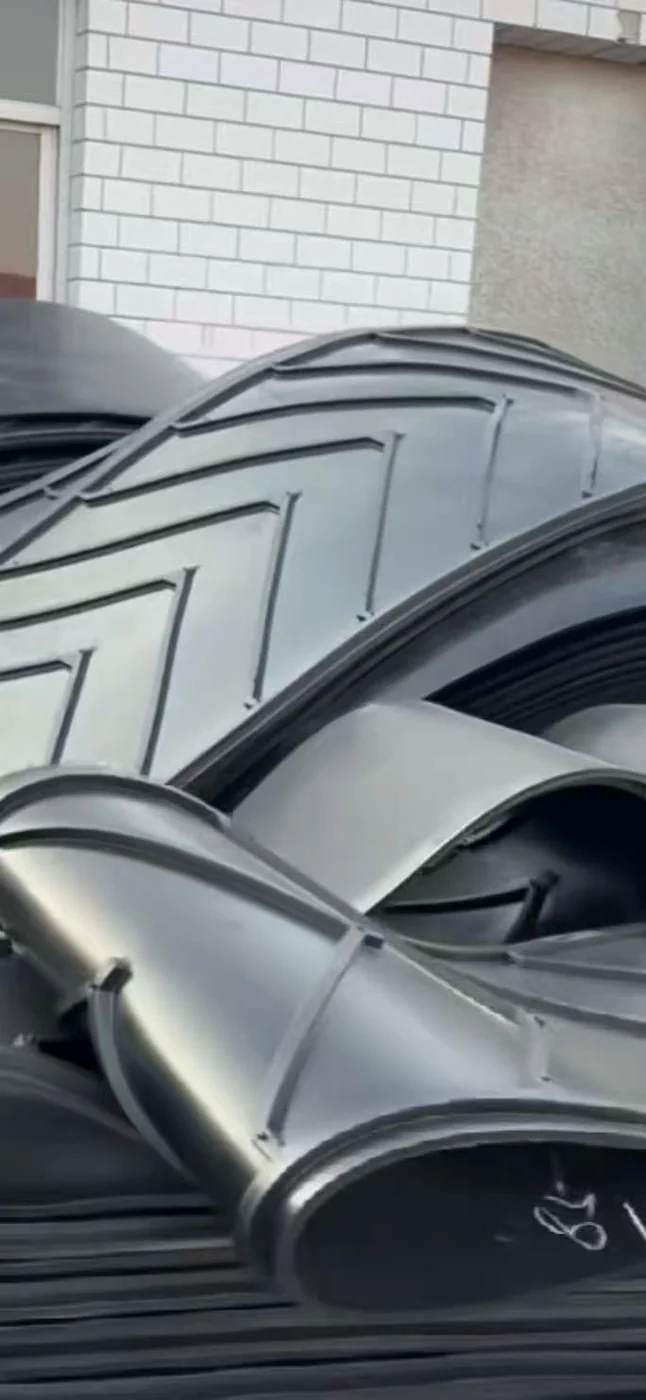
Chevron Conveyor Belt
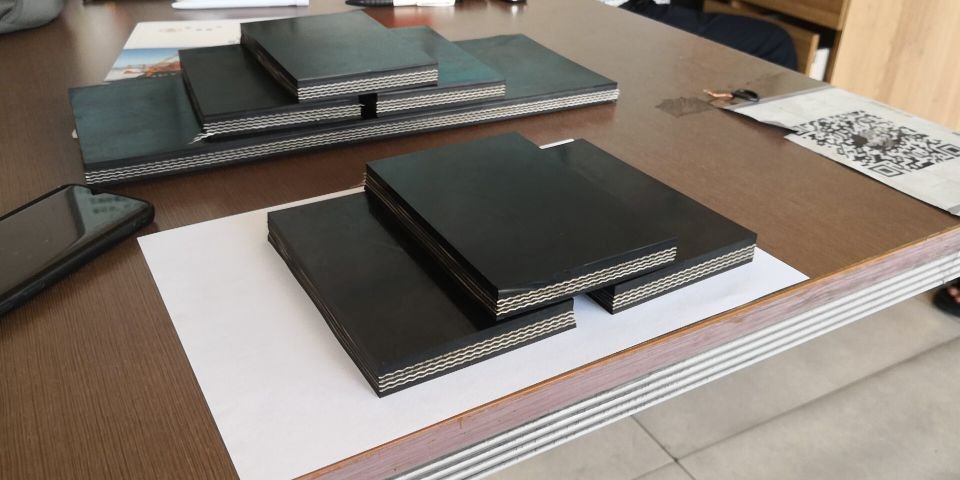
EP & NN Fabric Conveyor Belts
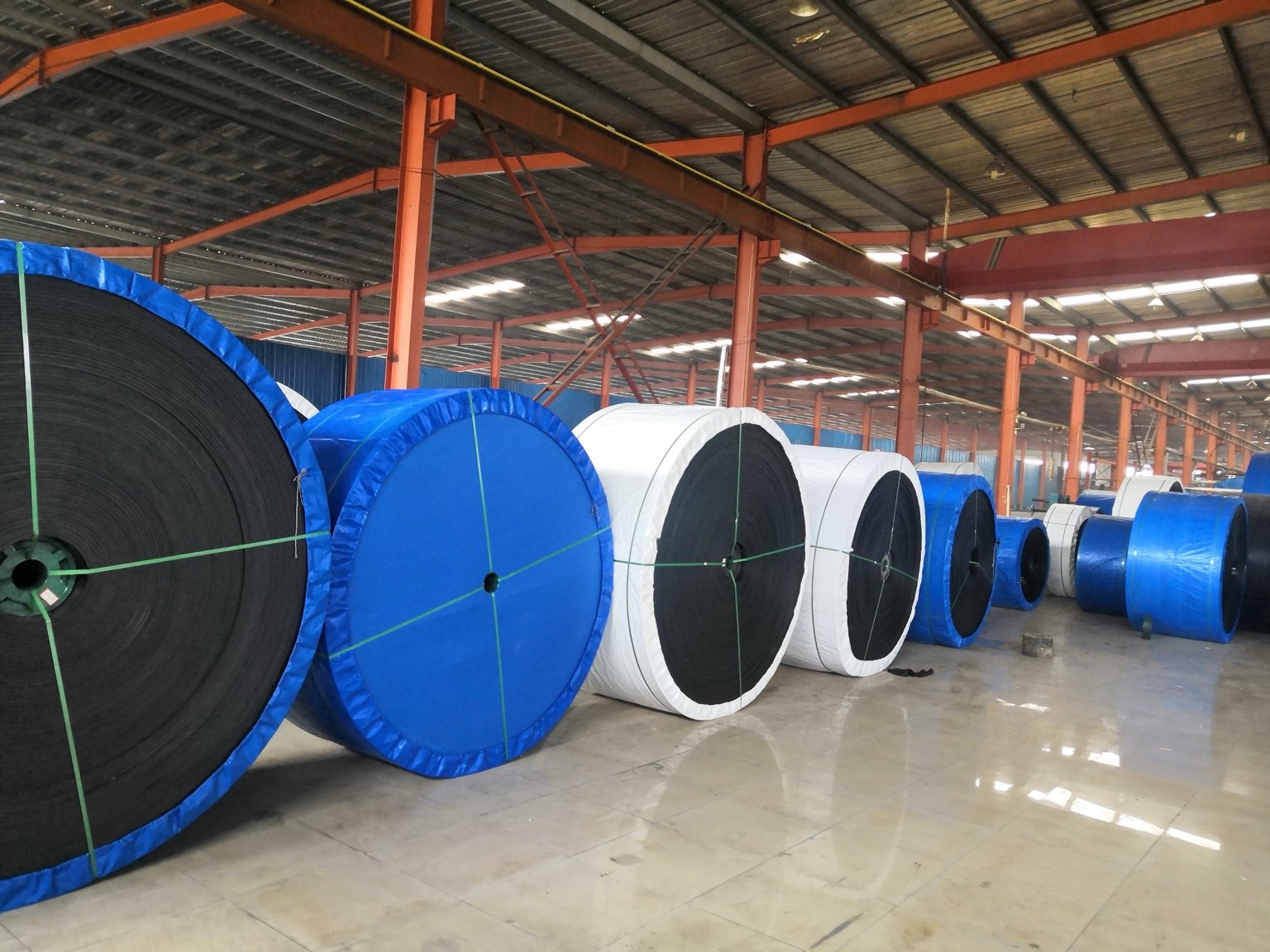
Heat Resistant Conveyor Belt
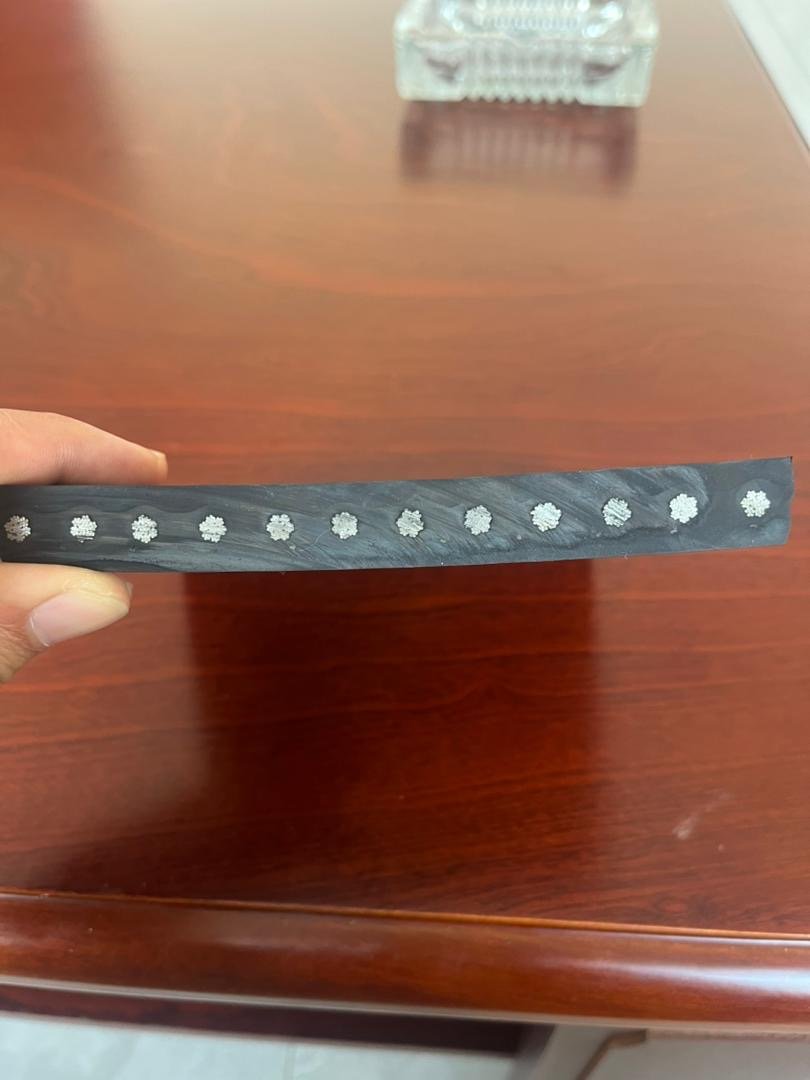
Wire Rope Conveyor Belt

Acid and Alkali Resistant Conveyor Belt

General Flame Retardant Conveyor Belt
Solid Core Flame Retardant Conveyor Belt for Coal Mine

Nylon Conveyor Belt

Heat Resistant Conveyor Belt

Wire Rope Conveyor Belt


 English
 Spanish