
EVER JOY · CONVEYOR COMPONENTS | PRODUCT OVERVIEW
Impact Idler Rollers & Idler Sets
Rubber-ring cushioning for conveyor loading zones | Replacement fit & drawing-based supply
WHAT BUYERS CAN REQUEST
- Complete impact idler rollers
- Three-roll impact sets to drawing
- Replacement fit using shaft-end photos
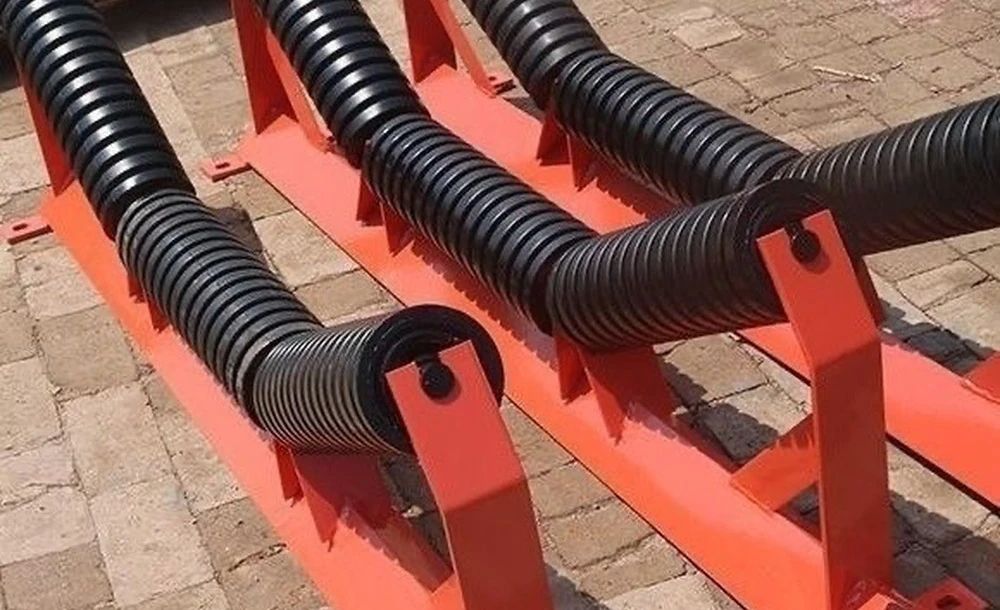
1. Product Overview
EVER JOY supplies rubber-ring impact idler rollers, three-roll impact troughing sets and replacement impact rings for belt-conveyor loading and transfer points. Resilient rings fitted around a steel roller help cushion material impact on the belt. Suitability depends on drop height, lump size, belt speed, duty and the dimensions of the existing conveyor structure.
For a faster quotation, send belt width, rubber-ring OD D1, roller face length L, overall shaft length S, shaft-end photo and quantity.
2. Select the Correct Supply Scope
A replacement rubber ring, a complete impact roller and a framed idler set are different purchase items. Confirm the supply scope before requesting a price.
| SUPPLY OPTION | TYPICAL CONTENT | KEY DIMENSIONS TO CONFIRM |
|---|---|---|
| Complete impact roller | Rubber-ring-covered shell, shaft, bearings and sealing components | D1/D2, L, S, shaft-end detail, bearing and fit |
| Three-roll impact idler set | Normally three impact rollers plus the matching frame, if specified | Belt width, trough angle, mounting holes and frame height |
| Replacement impact rings | Separate rubber cushioning rings supplied to specification | Ring OD, bore ID, width, compound/hardness and quantity |
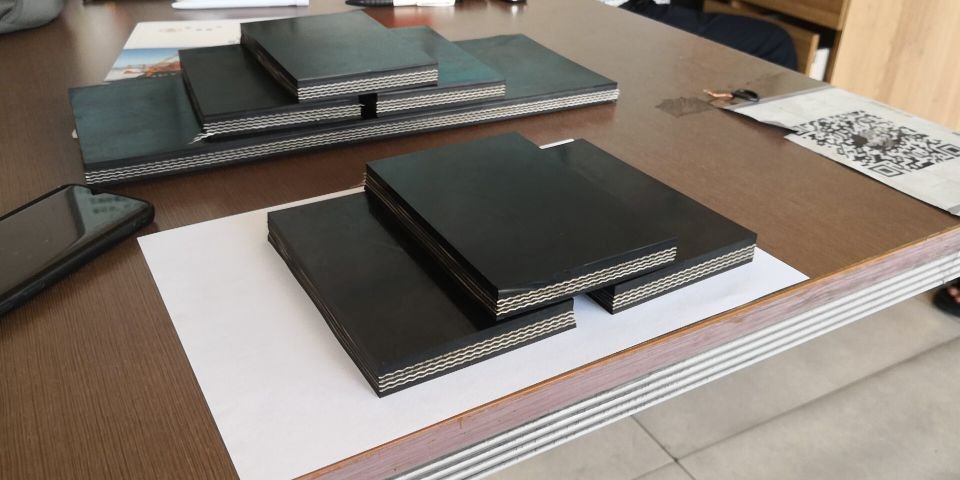
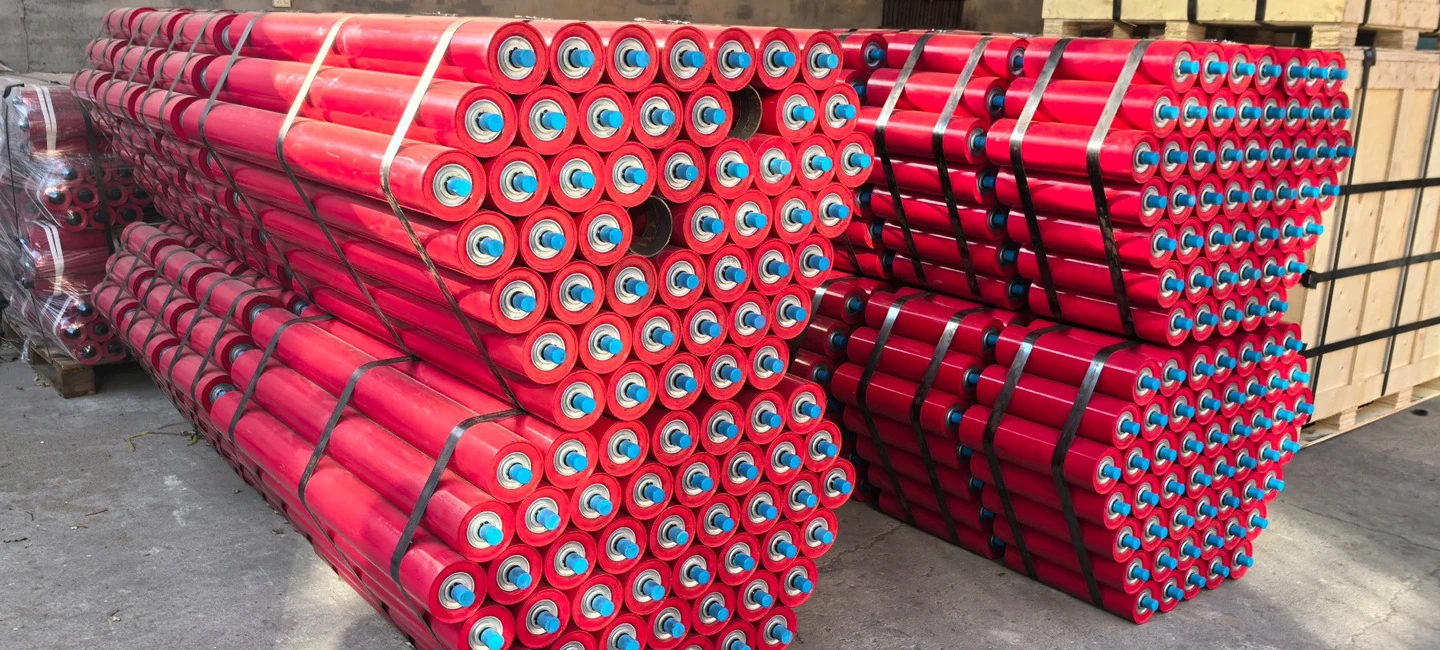
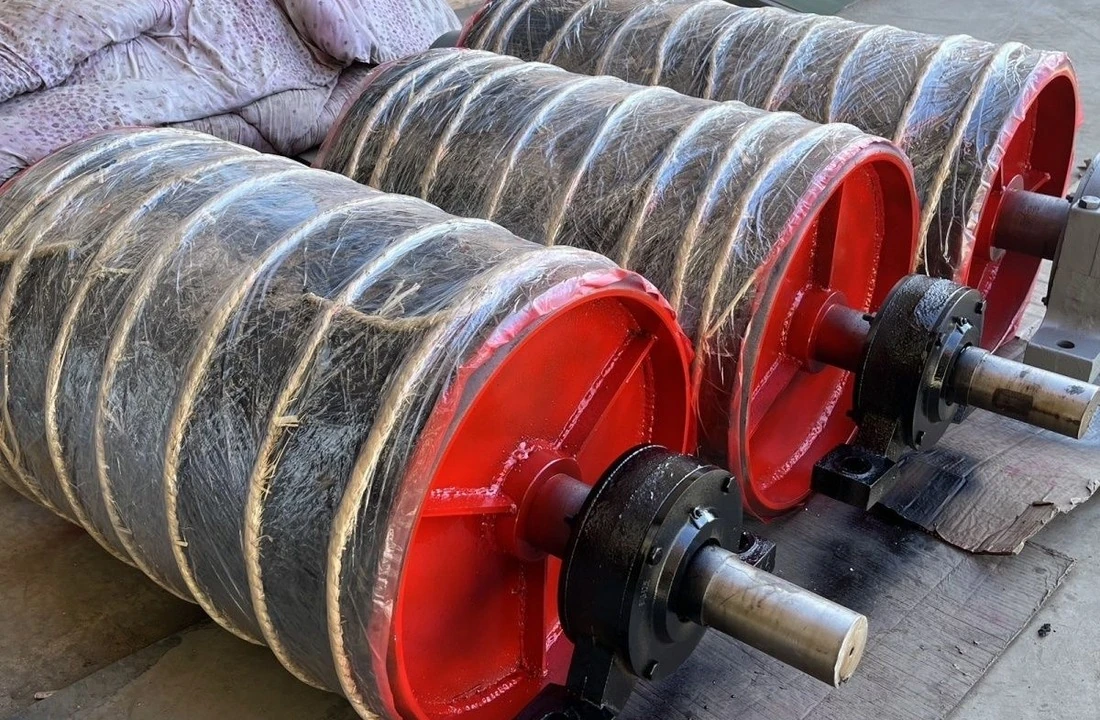
3. Product Photos & Identification
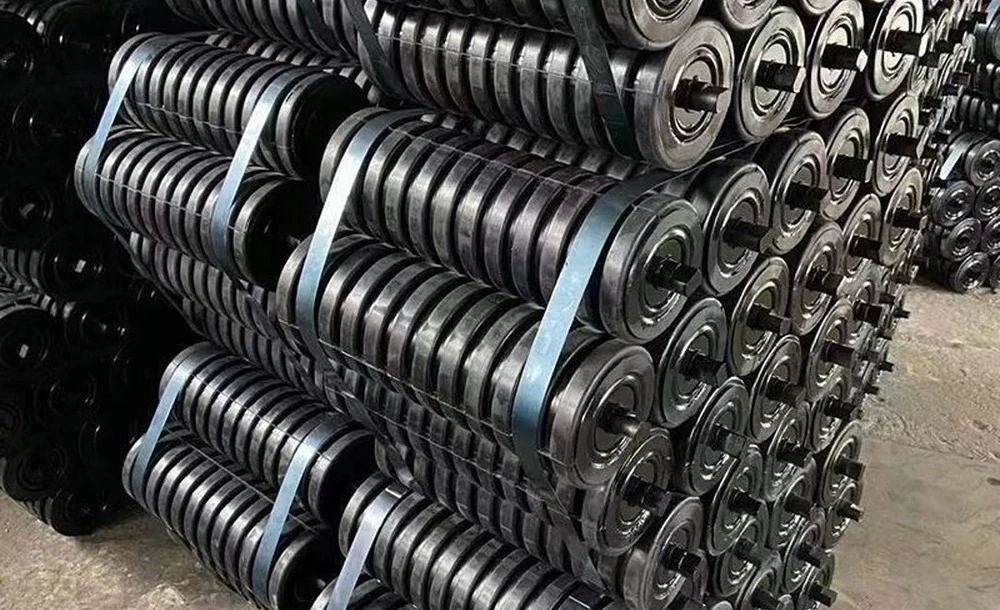
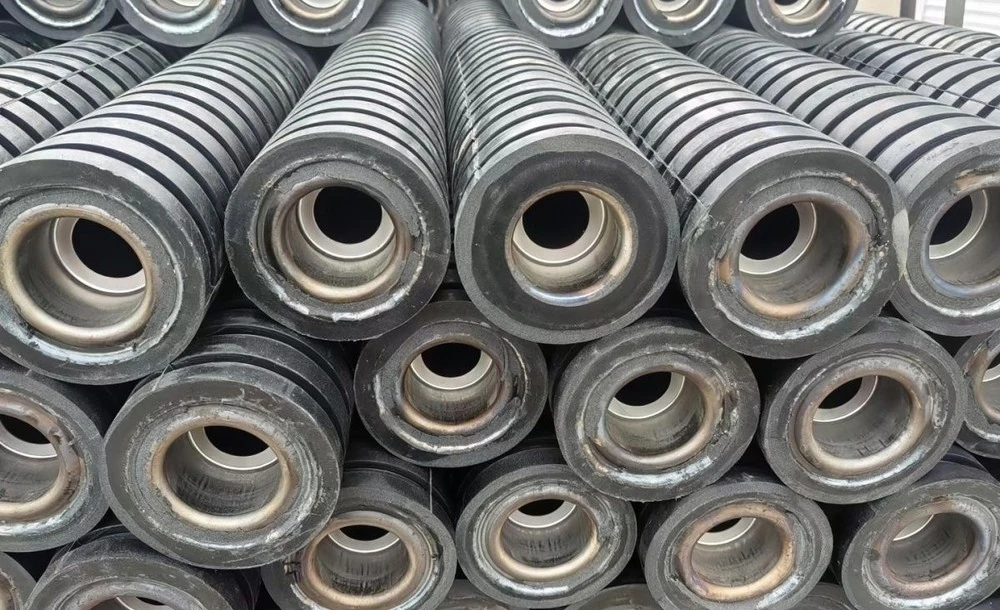

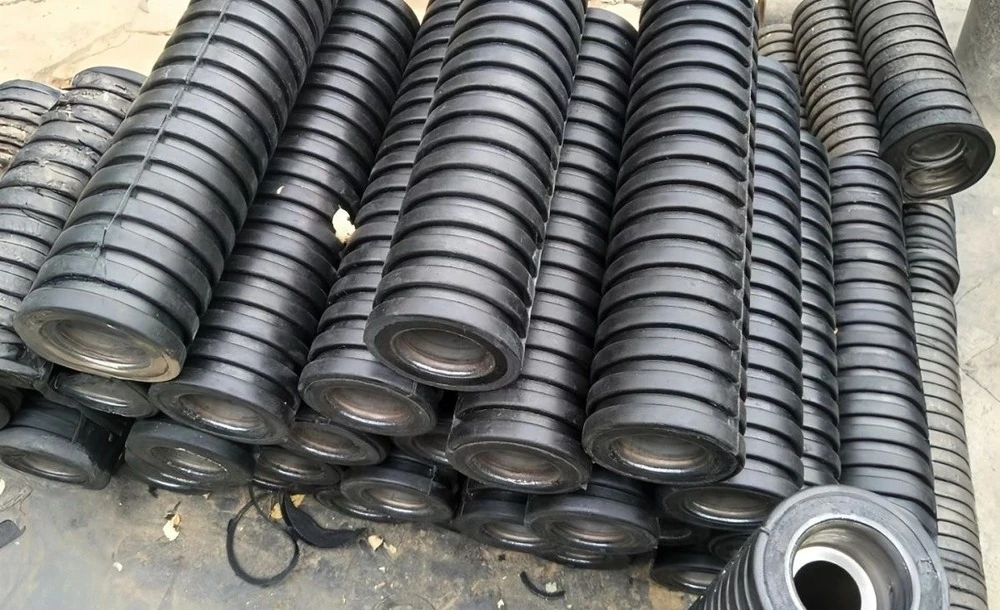
4. Dimensions: Confirm the Fit Before Ordering
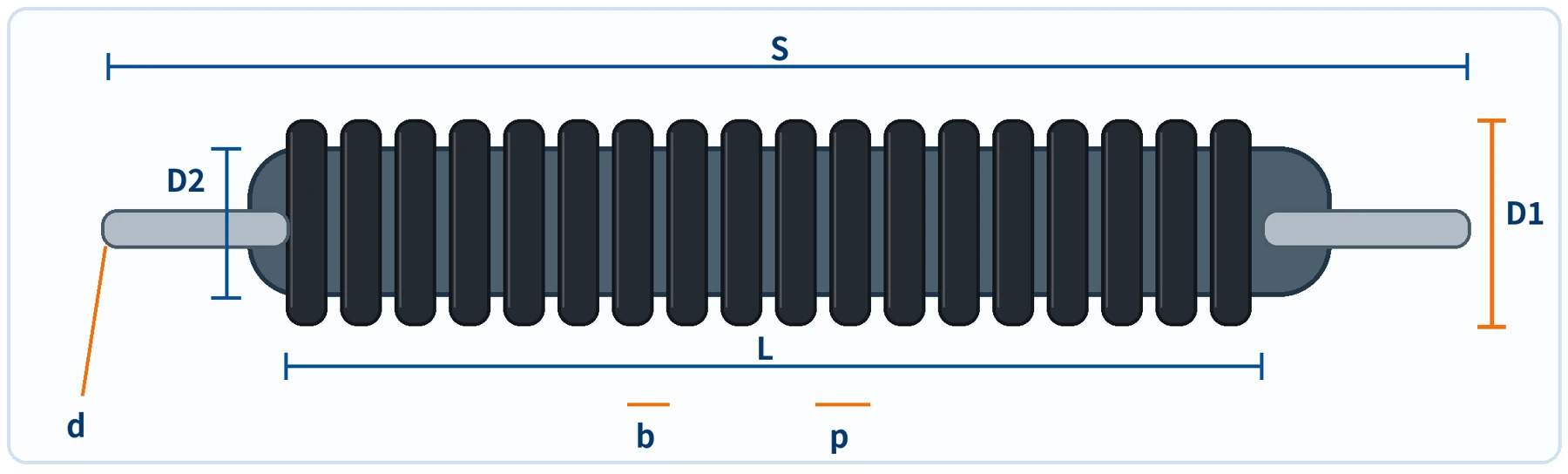
Belt width alone does not determine a replacement idler. Match the rubber OD, steel shell, roller face, overall shaft length and shaft-end connection to the existing frame.
| CODE | MEANING | WHAT THE BUYER SHOULD PROVIDE |
|---|---|---|
| D1 | Rubber-ring outside diameter | State separately from steel tube OD D2 |
| D2 | Steel roller shell diameter | Controls ring bore and shell construction |
| L | Roller shell / ring-covered face length | Identify where the measurement starts and ends |
| S | Overall shaft length, end to end | Critical for replacement mounting fit |
| d | Shaft and shaft-end diameter | Show each step for stepped shafts |
| E₁/E₂ | Left / right shaft projections | State separately if unequal |
| F | Shaft-end flat or slot-fitting dimension | Add an end-view photo or drawing |
| b / p | Ring width / ring pitch | Specify when buying separate rings |
5. Typical Industry Reference Sizes (mm; not a stock list)
| PARAMETER | REFERENCE VALUES |
|---|---|
| Ring OD D1 | Ø89 / 108 / 133 / 159 / 194 / 219 |
| Steel shell OD D2 | Ø63.5 / 76 / 89 / 108 / 133 |
| Shaft diameter d | Ø20 / 25 / 30 / 35 / 40 |
| Trough angles | 20° / 30° / 35° / 45° |
6. Application, Inspection & Delivery
A loading zone imposes dynamic impact as well as material weight. State the real operating conditions before selecting shell, shaft, bearings, seals and frame.
Operating Data for Proper Selection
| TOPIC | BUYER INFORMATION |
|---|---|
| Material impact | Material type, maximum lump size, drop height, bulk density and loading method |
| Conveyor data | Belt width and speed, trough angle, idler spacing and expected duty |
| Replacement fit | Existing drawing/photo, shaft-end form, frame hole centres and mounting height |
| Site conditions | Dust, water, temperature, corrosive media, duty cycle and servicing |
Inspection Items to Agree on the Order
| INSPECTION | AGREED CHECK |
|---|---|
| Dimensions & interchangeability | D1, D2, L, S, d, shaft ends and frame fit |
| Rubber cushioning rings | Appearance, hardness if agreed, cracking, spacing and fixation |
| Roller rotation & bearing | Free rotation, runout, abnormal noise and axial movement |
| Seals & packing | Sealing requirements, finish, corrosion protection, shaft-end protection and labels |
7. Applications & Maintenance
Common applications include aggregate crushing, mining transfer points, cement works, coal handling and ports. Severe drop conditions may also call for review of chute design, idler spacing or an impact bed. Inspect rubber-ring cracks, abnormal wear, seized rollers and bearing noise. Isolate and lock out the conveyor before any replacement work.
8. Buyer FAQ
How is an impact idler different from a standard carrying idler?
Impact rollers have cushioning rubber rings for loading and transfer points; ordinary carrying idlers mainly support the belt during normal travel.
Can I order using belt width only?
No. It is a starting point, not a complete specification. Confirm L, S, shaft ends, trough angle and frame geometry.
Do all pictured items include shafts and frames?
No. Complete rollers, framed sets and loose rings have different scopes of supply. Specify exactly what you need.
Can you match an existing conveyor?
Send an approved drawing or existing roller dimensions and photos. Shaft-end flats, projections and slots are particularly important.
Is harder rubber always better?
Not necessarily. Compound, hardness, abrasion, impact severity and site conditions should be selected together.
What should be fixed before production?
Agree drawing revision, supply scope, inspection criteria, packaging and acceptance requirements in writing.
9. RFQ Checklist
Send These Details for a Reliable Quotation
- 1 Scope: single roller / three-roll set / loose rings
- 2 Belt width, belt speed, material and drop height
- 3 D1 / D2 / L / S / d / shaft-end flat F
- 4 Trough angle, frame hole centres and drawing/photo
- 5 Quantity, application and destination country/port
10. Contact EVER JOY
Contact EVER JOY | Attach a drawing or photos of your existing idler to help avoid an incompatible replacement.
 English
 Spanish