
EVER JOY
Custom Heavy-Duty Belt Conveyors
Engineered-to-Order Systems for Mining, Aggregates, Cement & Ports
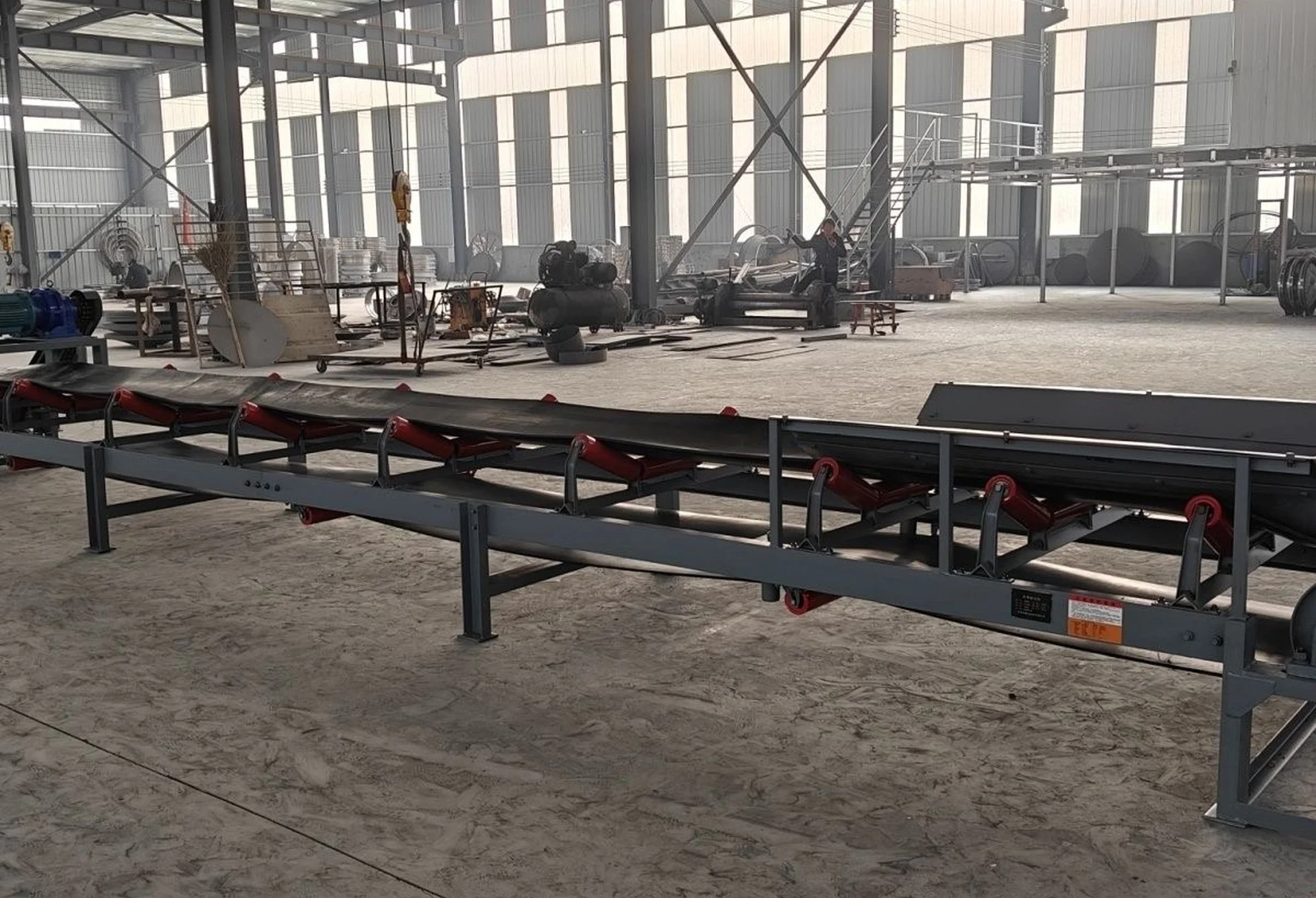
EVER JOY supports the manufacture and supply of project-configured belt conveyors for mining, quarrying, crushing plants, cement works, terminals and other bulk-handling facilities. Conveyor belts, pulleys, idlers, drive units, structural frames, take-up systems and accessories are matched to the material and layout requirements. Final engineering scope and performance figures are subject to approved drawings and a project-specific technical agreement.
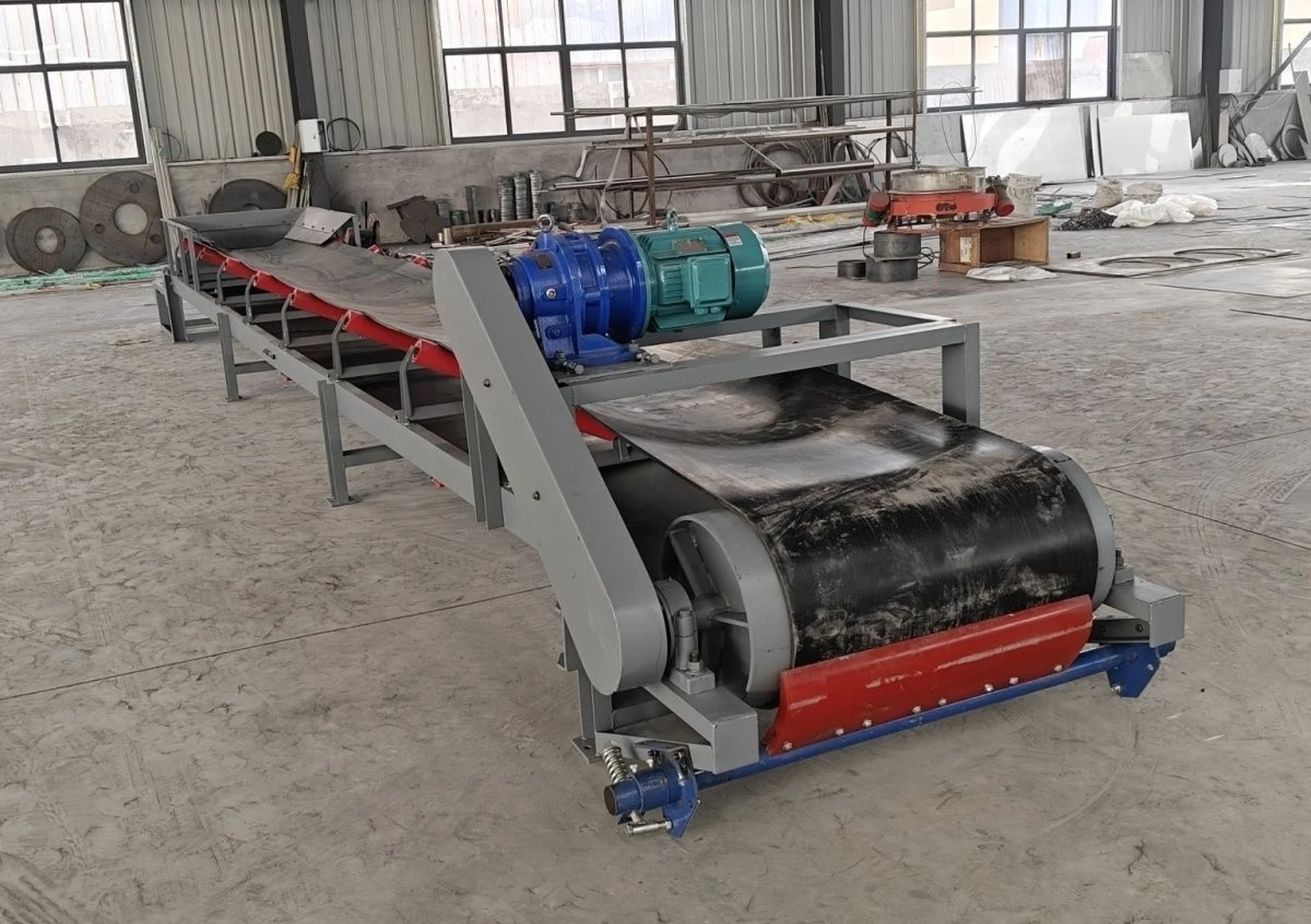
Project-specific configuration • Belts and conveyor components
Drives · Pulleys · Idlers • Custom layouts and export supply
2. Why engineer the conveyor to your operation?
A heavy-duty conveyor needs more than a reinforced frame. Required throughput, bulk density, lump size, belt speed, conveyor route, lift and starting/braking conditions all affect belt tension, drive selection, pulley loading and take-up design.
Built around the duty, not a generic model number
| Fixed Heavy-Duty Belt Conveyors | Continuous transfer of ore, coal, aggregates, clinker and other bulk solids; frame, drive and loading/discharge sections engineered to project duty. |
|---|---|
| Inclined and Elevating Conveyors | System geometry, trough profile and belt type are selected around lift height, slope and the material’s tendency to slip. |
| Corrugated Sidewall / Special-Belt Systems | For constrained layouts or elevated transfer points, sidewall-and-cleat options can be evaluated with matching pulleys and transitions. |
| Retrofit and Component Integration | Replacement conveyor belts, pulleys, idler sets, drives and cleaners may be specified from existing drawings, subject to site-fit verification. |
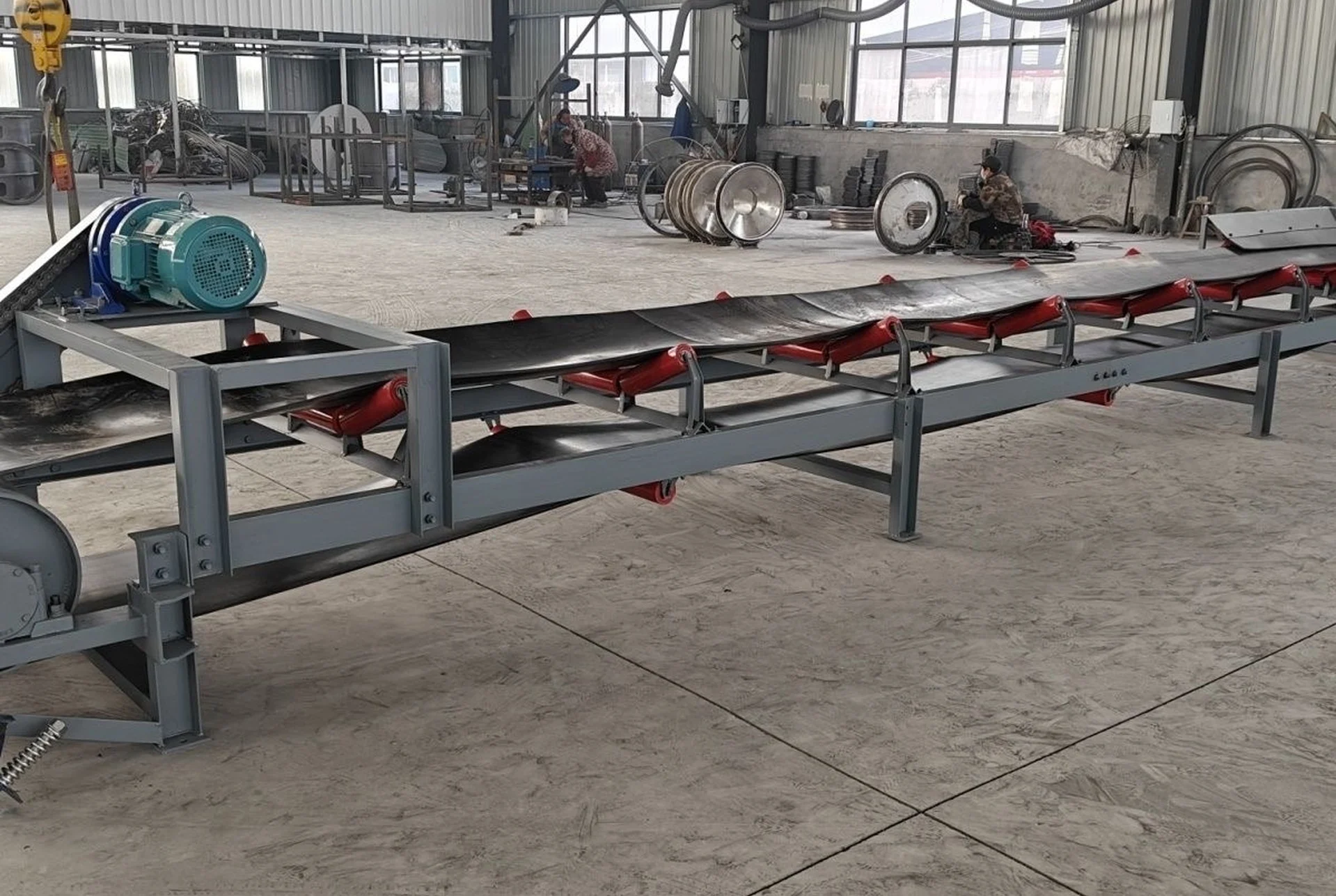
3. Belt configurations for different material-handling duties
Sidewall, cleated and chevron belts are considered against slope, material behavior, belt tension and installation constraints. Configurations shown are for engineering discussion, not fixed performance ratings.
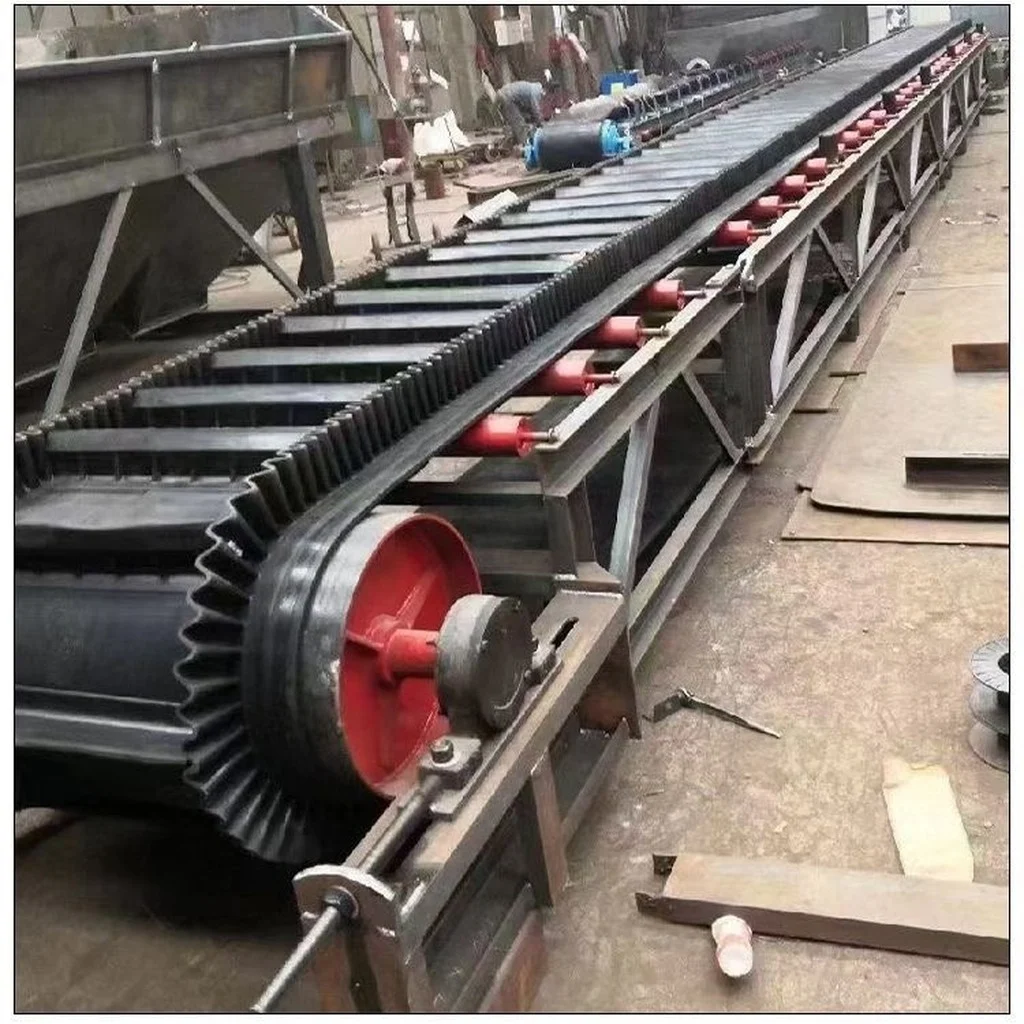
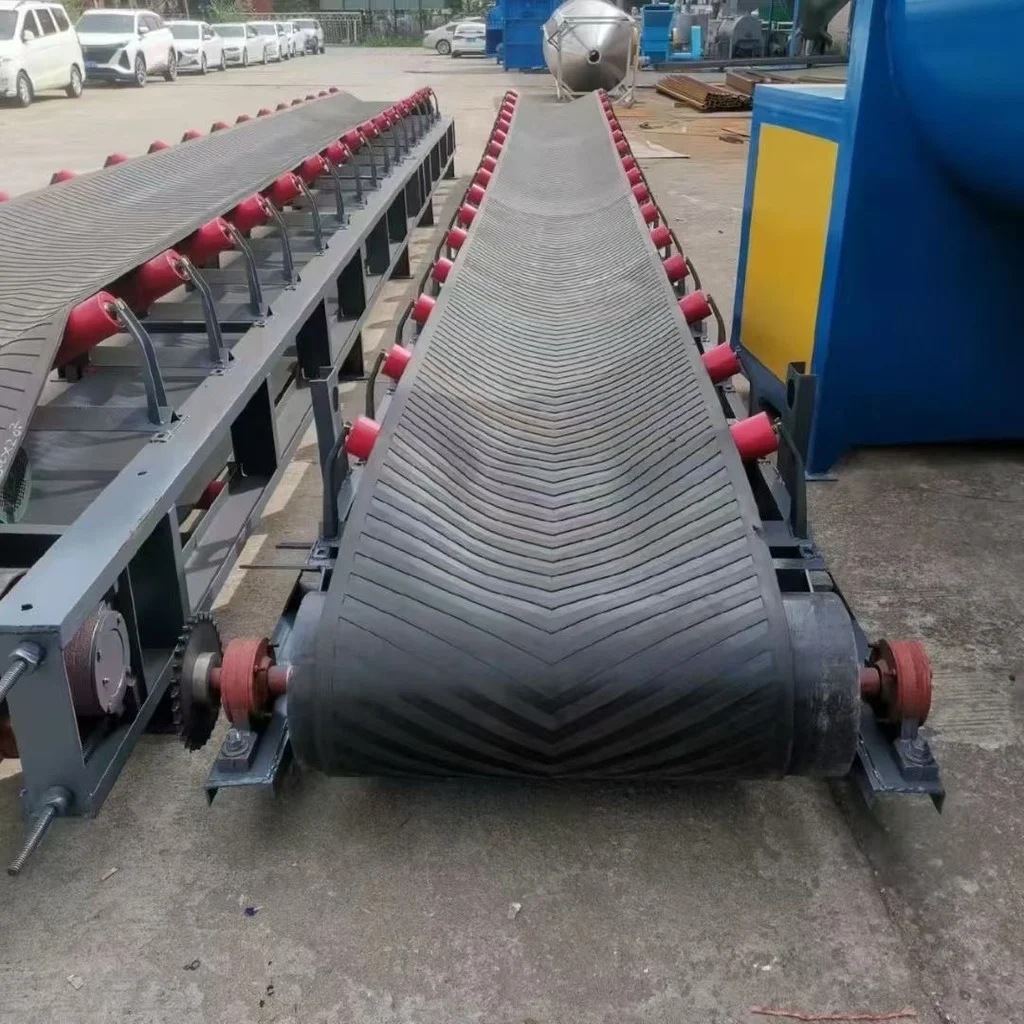
Loading points, transition sections and pulley geometry must be engineered together. Belt appearance alone does not establish maximum incline or throughput.
4. What can be tailored to your project
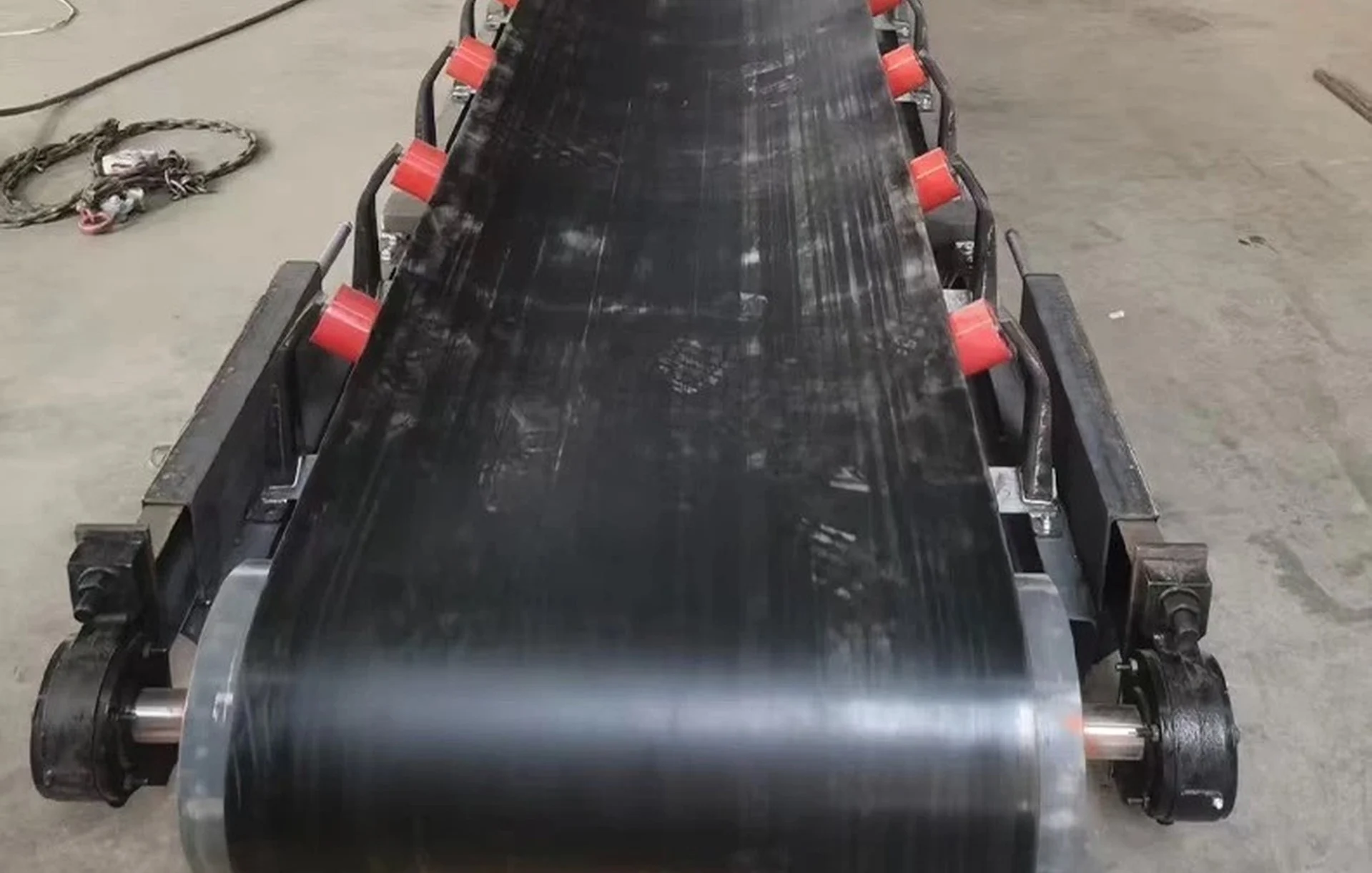
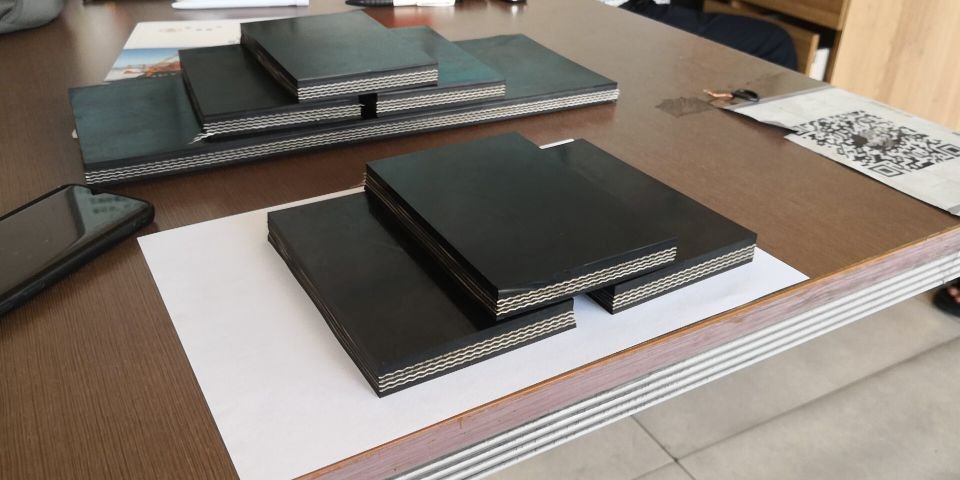
| Conveyor belt | EP/NN fabric, steel cord, wear-resistant, heat-resistant, chevron or sidewall options selected against duty and tension |
|---|---|
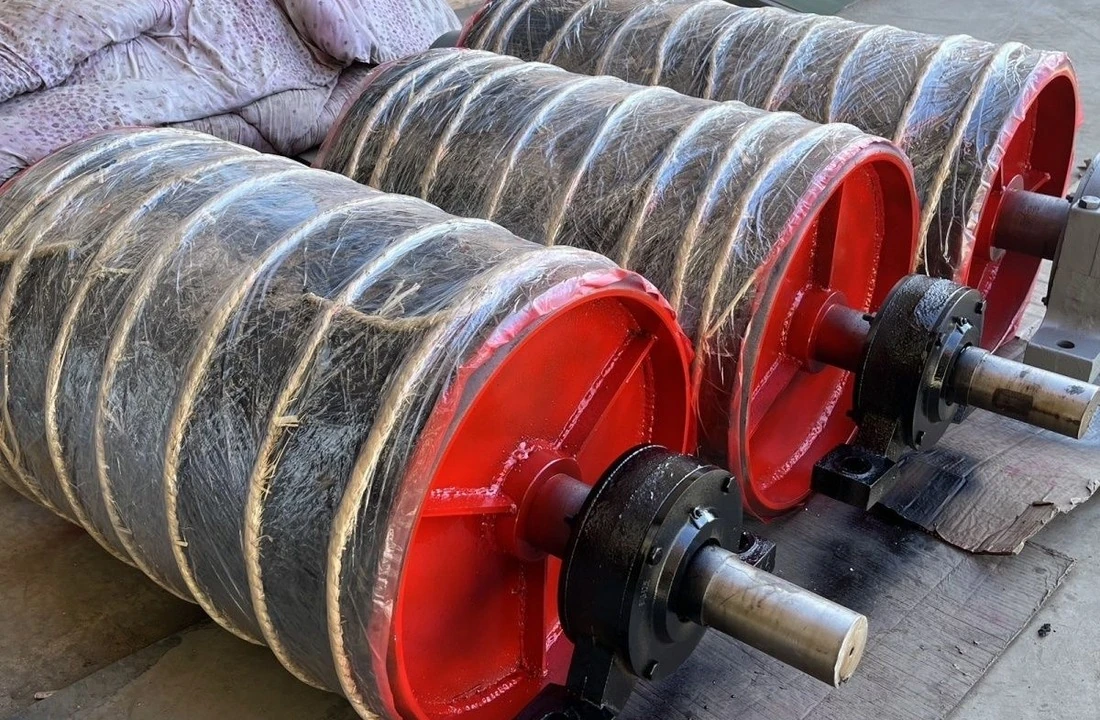
| Drive & pulleys | Motor, gearbox, coupling, drive/tail/bend pulleys and lagging selected after load and belt-tension calculations |
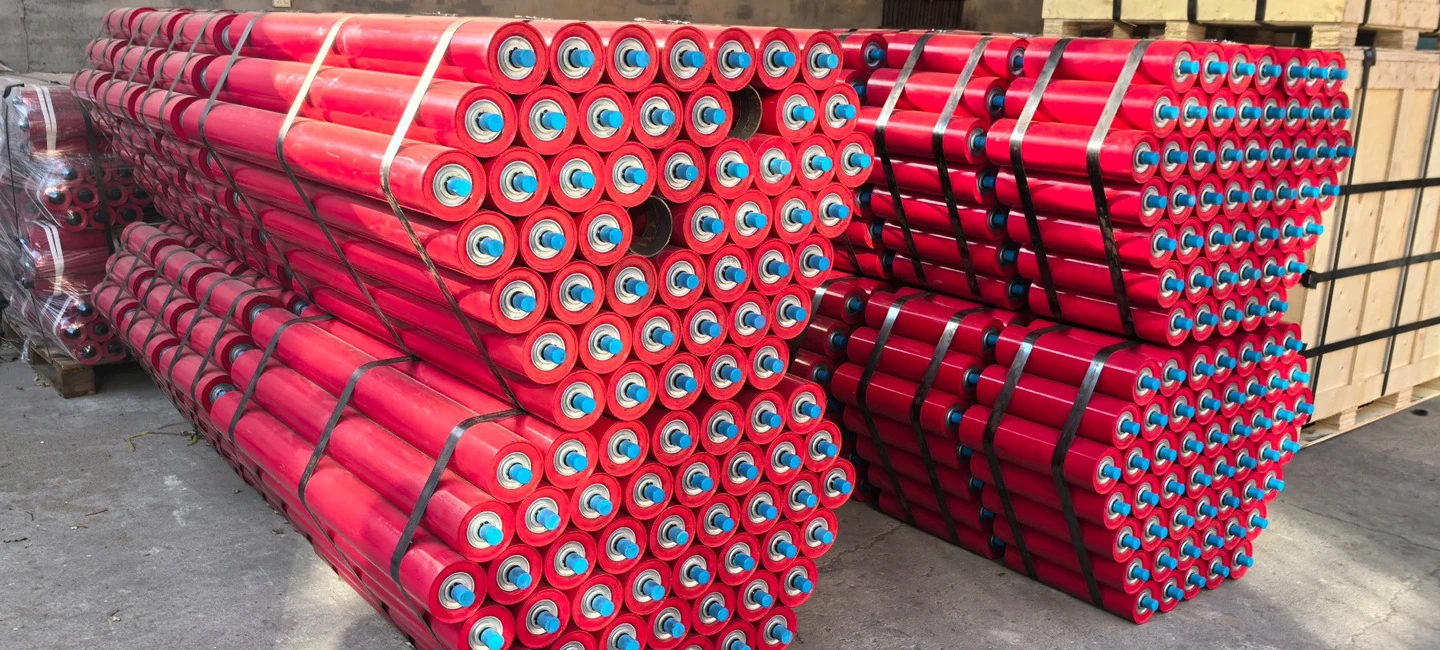
| Idlers & frames | Troughing, return, impact and training idlers; configuration depends on belt width, speed, load and access |
| Take-up & safety | Screw or gravity take-up as appropriate; tracking, slip, emergency-stop and other protection per project risks |
| Loading & cleaning | Skirtboards, impact beds, belt cleaners and dust-control items configured around the loading zone |
| Structure & installation | Supports, trusses, maintenance access, interfaces and protective coating to approved site drawings |
Major components are selected against load, drive power, belt tension and access requirements. Mechanical scope, electrical controls and site services are itemized in the formal offer.
5. RFQ checklist for conveyor engineering
Share the following project data so we can review the duty, define the supply scope and prepare a proposal.
| Bulk material and duty | Material, bulk density, maximum lump size, moisture, abrasiveness, temperature |
|---|---|
| Throughput | Rated and peak capacity (t/h), feeding conditions, operating hours |
| Route and lift | Conveyor length (m), plan/elevation drawing, lift height (m), slope and route constraints |
| Belt and speed | Preferred belt width (mm), speed (m/s) or request engineering selection; reversible duty |
| Drives and controls | Power supply (V/Hz), start/stop duty, VFD/PLC and interlock requirements |
| Mechanical equipment | Pulleys, idler trough angle, take-up, loading points, guards and cleaners |
| Site and compliance | Indoor/outdoor, ambient temperature, dust/corrosion/altitude and local safety rules |
| Supply and delivery | Quantity, layout/drawings, destination country, scope split, installation/commissioning support |
Project workflow and agreed inspection
- 01 Review site and material data
- 02 Select layout and components
- 03 Approve scope and drawings
- 04 Fabricate, assemble and inspect
- 05 Protect, pack and ship
Inspections may cover critical dimensions, visible weld condition, assembly fit, pulley/idler rotation, agreed no-load checks, coating and shipment protection. Third-party inspection, loaded trials and on-site commissioning must be expressly included in the contract if required.
Frequently asked questions
01 Do you supply complete conveyors or individual components?
Both can be discussed. Our quotation clearly defines included mechanical equipment, electrical controls, structures and site services.
02 Is belt width enough to determine throughput?
No. Capacity depends on speed, loading cross-section, bulk density, trough angle and feed conditions.
03 Can you tailor the drive and frame to our layout?
Yes, project requirements can be evaluated against a site layout, material data and required throughput before configuration is agreed.
04 What should I send for a proposal?
Material, target t/h, conveyor length, lift height, site drawing, power supply, destination and supply scope.
Share your layout and material data for a custom conveyor proposal
Please send material type, required t/h, conveyor length (m), lift height (m), belt width preference, power supply (V/Hz), destination and site photographs or drawings.
info@everjoyconveyor.com · WhatsApp: +86 15175229655
Final equipment configuration, technical specifications, inspections and supply scope are governed by the approved project drawings and technical agreement.
 English
 Spanish