
EVER JOY / CONVEYOR COMPONENTS
Polyurethane Conveyor Belt Cleaners
Primary Scrapers · H-Type Cleaners · V-Plough Return Cleaners
- Carryback control
- Head-pulley & return-belt options
- Tensioning assemblies available
- Fit-to-installation selection
1. Why use a belt cleaning system?
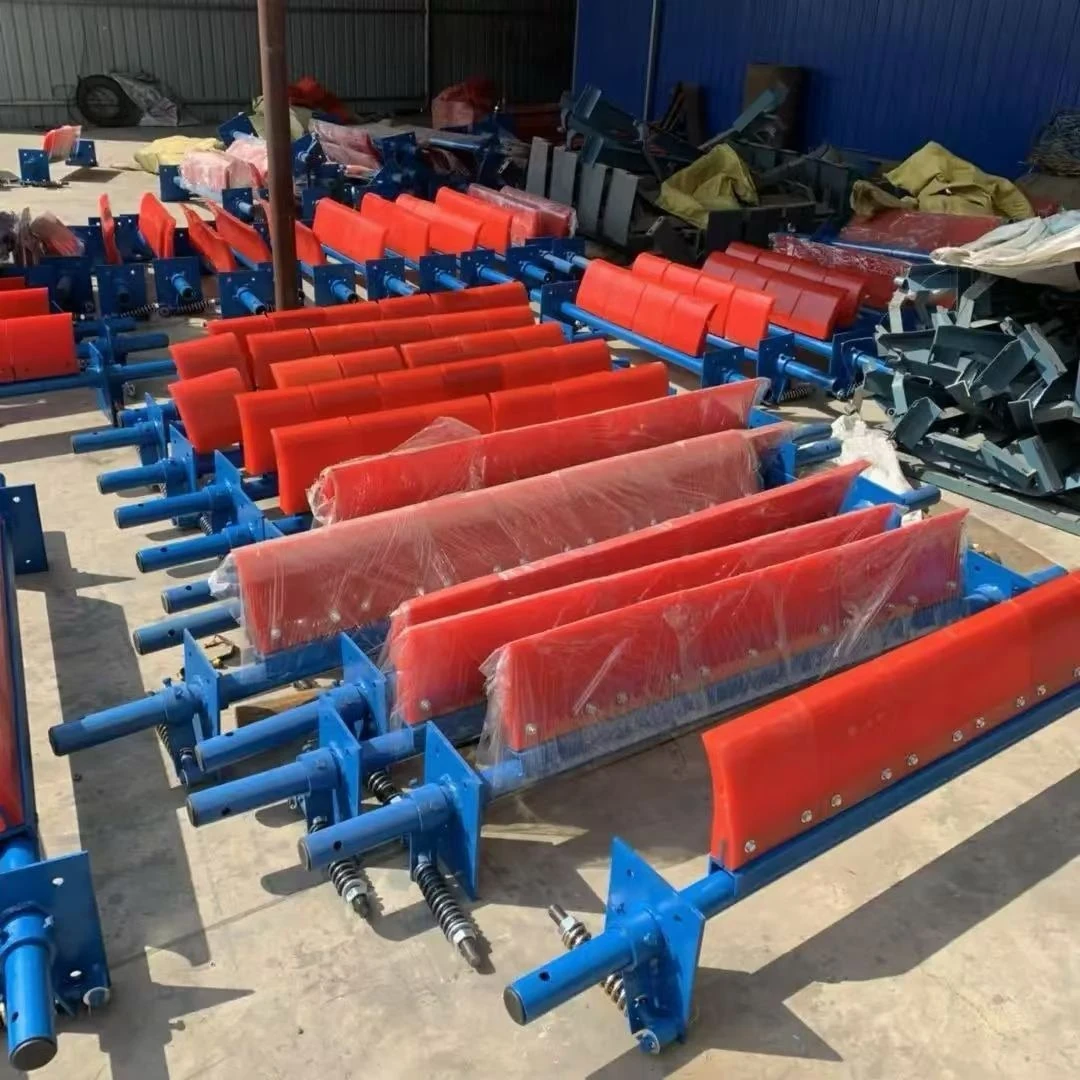
Cleaning solutions for bulk-handling conveyors in mining, aggregates, cement, ports and related industries. EVER JOY supports specification and supply enquiries for cleaner assemblies, replacement blades and mounting components. Final construction and materials follow the approved drawing and purchase specification.
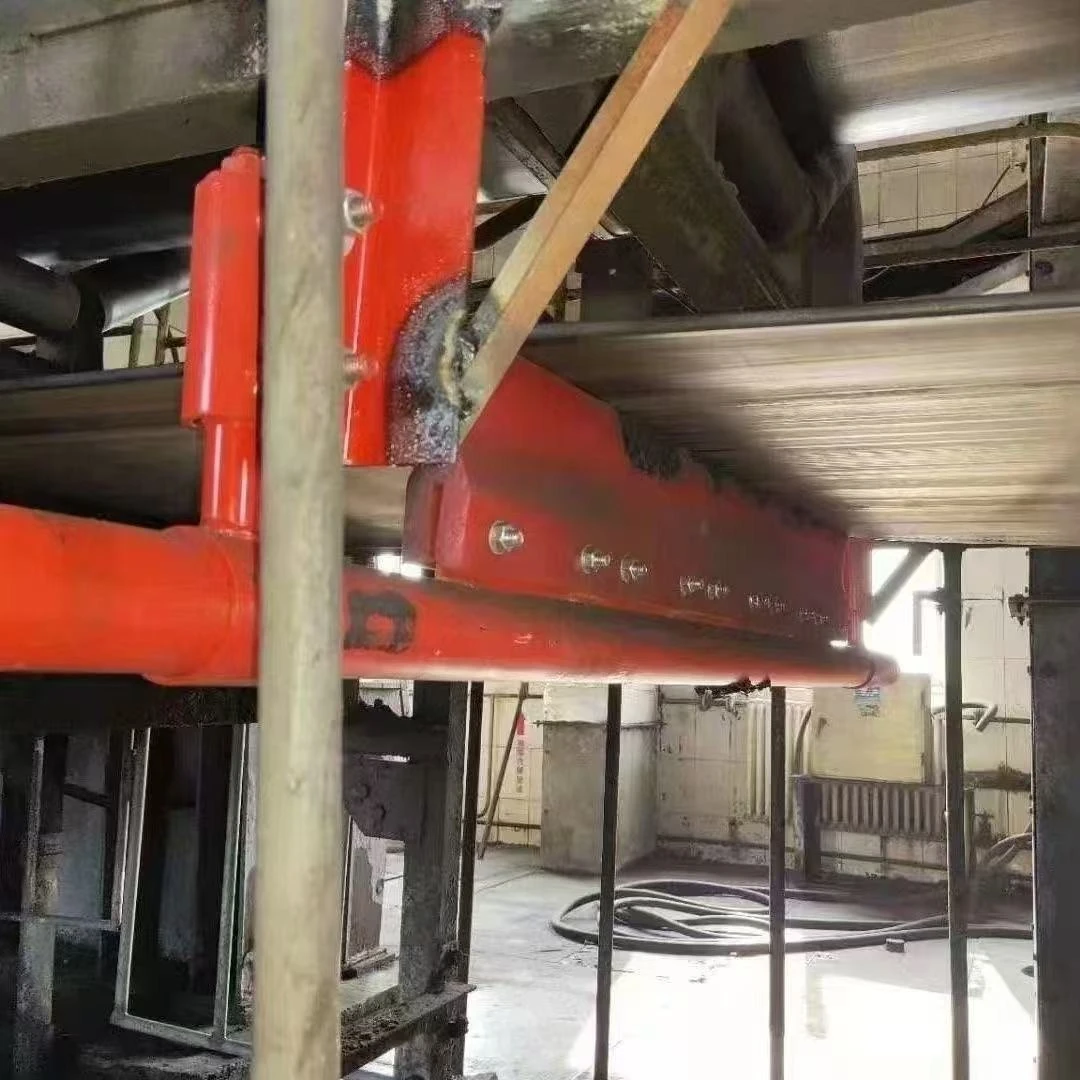
After discharge, material can remain on the belt surface and travel into the return strand. A correctly selected primary scraper helps limit carryback and build-up around return idlers and structures. A V-plough serves a different purpose: it diverts debris from the inside (clean side) of the return belt before the tail pulley. Performance depends on the conveyed material, moisture, belt surface, tensioning and installation.
2. Cleaner configurations: choose by location and duty
Primary Belt Cleaner
Normally positioned at the head pulley near the discharge point to remove the bulk of material carried back on the belt surface. Check pulley diameter, blade contact zone, cleaning width and tensioner clearance.
H-Type Primary Cleaner
An H-type configuration of a primary cleaner. Interchangeability depends on blade profile, pole dimensions, mounting arrangement and tensioner geometry—not the “H-type” label alone.
V-Plough Return Belt Cleaner
Works on the inside (clean side) of the return belt, commonly ahead of the tail pulley, deflecting loose debris towards the edges. Check belt direction, width and frame clearance.

3. Three points buyers should verify
| Question | What to check |
|---|---|
| Is a primary scraper the same as a V-plough? | No. A primary cleaner targets carryback on the belt’s conveying surface at the head; a V-plough removes loose material on the inside of the return belt. |
| Does a red blade prove it is polyurethane? | No. Colour alone does not verify polymer formulation, Shore A hardness, abrasion or oil resistance, or operating temperature. |
| Is belt width enough to select a unit? | No. Pulley diameter, speed, splice type, mounting space, pole/tensioner design and existing frame dimensions also matter. |
4. RFQ and installation-fit checklist
The fields below are required for specification review. They are not an EVER JOY stock list or guaranteed model specifications.
| Parameter | Information to confirm |
|---|---|
| Belt width BW (mm) | State actual belt width and required effective cleaning width |
| Cleaner type and location | Primary / H-type primary / V-plough; attach installation photos |
| Blade and material | Blade length, profile, thickness; material and Shore hardness to be specified |
| Conveyor operation | Belt speed (m/s), direction (one-way/reversible), head pulley diameter |
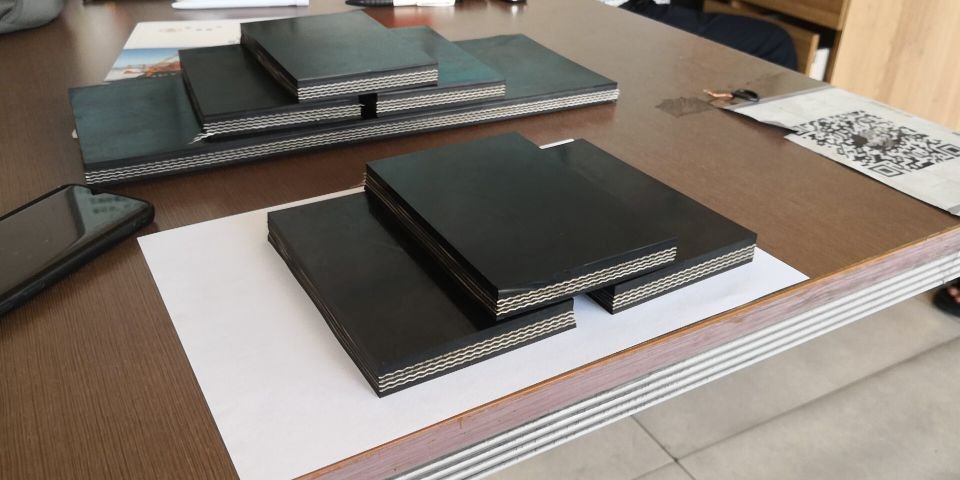
| Belt condition | Smooth or patterned surface, vulcanized/mechanical splice, existing damage |
| Bulk material and duty | Material, lump size, moisture/stickiness, temperature, dust/water/oil exposure |
| Mounting and tensioner | Pole/span, bolt pattern, available clearance, spring/tensioner arrangement |
| Scope and quantity | Complete assembly / replacement blade / tensioner parts; quantity and destination |
5. Installation and maintenance considerations
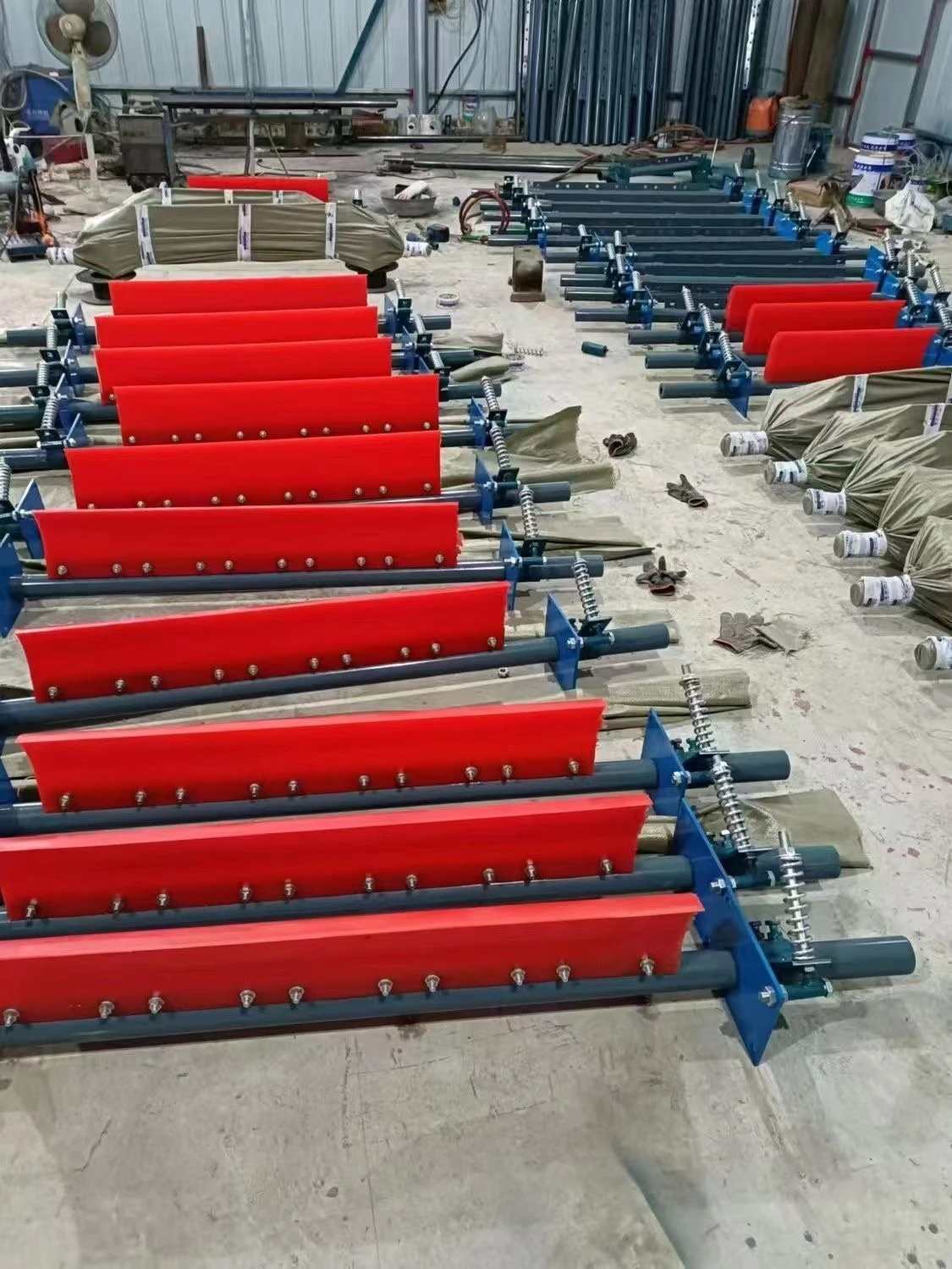
- Locate primary cleaners to suit the head pulley, discharge trajectory and structure; do not place the blade directly in the bulk material stream.
- Select V-plough position for the inside return-belt path. Reversing belts require a separately validated design; do not assume one-way V-plough suitability.
- Set blade pressure according to the approved installation instructions. Over-tensioning can accelerate belt and blade wear.
- Inspect blade wear, spring settings, fasteners, belt tracking and cleaning performance; isolate and lock out the conveyor before maintenance.
6. Frequently asked questions
Can I order replacement blades only?
Provide the existing blade section, length, mounting interface and photos. Replacement parts are not automatically interchangeable across brands.
Will it work with chevron belts or mechanical fasteners?
Compatibility must be checked. Raised patterns and fasteners may interfere with the blade.
Can you guarantee 100% cleaning?
No fixed cleaning percentage should be assumed. Results depend on material, belt condition, correct setup and maintenance.
What are the blade hardness and service life?
These depend on the approved material grade and operating duty. Red colour alone is not a specification.
Do I need a secondary cleaner?
A separate secondary stage may help with sticky fines or demanding carryback targets; the exact configuration must be confirmed.
What is needed for an accurate quotation?
Send belt width, cleaner type, pulley diameter, belt speed, site/old-unit photos, quantity and destination.
Request a belt cleaner selection review
Tell us whether you need a primary cleaner, H-type cleaner or V-plough. Include belt width, an installation photo or old-unit drawing, quantity and delivery country.
 English
 Spanish