
A rubber conveyor belt combines a tension-carrying carcass with protective covers. This guide explains how those parts are specified together, so that strength, thickness and cover requirements are not confused. For industry-specific duties in mines, quarries, cement plants and ports, use the rubber conveyor belt applications guide.
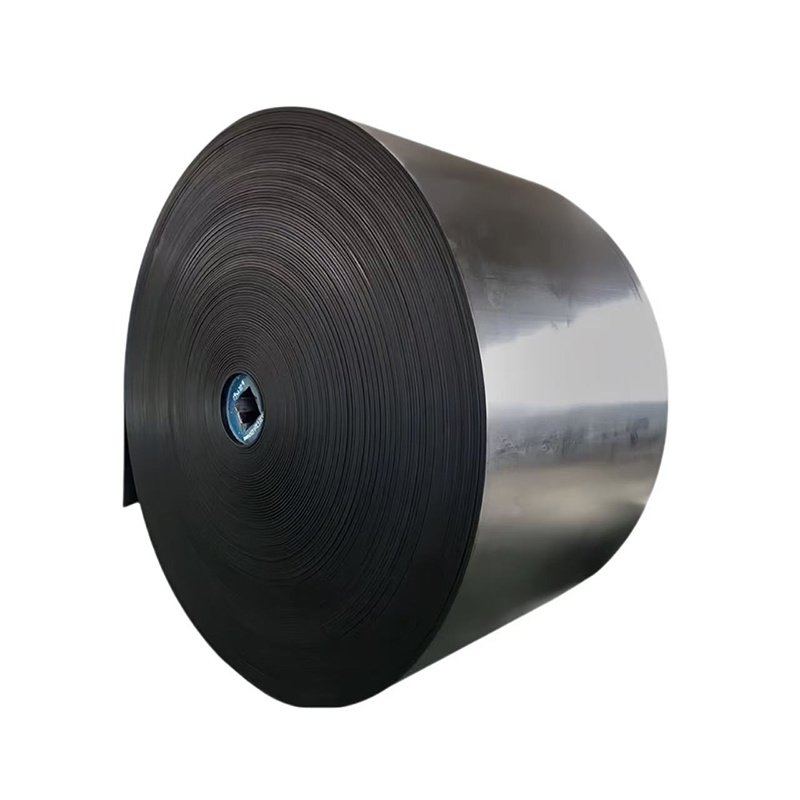
Reinforcement and Cover Have Different Roles
The carcass carries belt tension. EP and NN fabric and steel cord are different reinforcement options, selected against the conveyor design, load, take-up and pulley requirements. The top and bottom covers protect the reinforcement and must be specified for wear and exposure conditions.
Belt width alone does not establish the required strength. Confirm total belt strength, fabric plies or cord construction, cover thicknesses, edge type and splice requirements. List top cover, bottom cover and total thickness separately: a cover-thickness notation is not a complete belt-thickness specification. Reinforcement strength is also a different property from the tensile strength of a rubber cover.
Agree the Construction and Cover Standard
ISO 14890:2026 addresses general surface-use textile belting within its scope; it is not the specification for every reinforcement or special application. ISO 10247:1990 and its amendment concern general-purpose cover classification. Agree the applicable document, edition, cover grade, test methods and acceptance requirements in the order. A standard reference alone is not a certificate for an offered belt.
Match Performance to the Duty
- Abrasion and impact: Consider particle size, sharp edges, loading height, throughput and transfer-point design.
- Hot material: Record continuous and peak material temperatures separately from belt surface temperature. Confirm the limits of the specific heat-resistant construction offered.
- Oil or chemicals: Identify the substance, concentration, temperature and contact duration. A resistant cover is not universally resistant to all exposure.
- Flame-retardant duties: Compare general flame-retardant and PVC/PVG solid woven construction for the actual duty. Agree the required tests, electrical properties and any application-specific approvals. Anti-static performance alone does not establish fire safety.
- Inclined conveying: Assess the material, incline, speed and loading arrangement before specifying a chevron or other surface pattern.
Do Not Infer Certification from Appearance
A white or light-colored belt is not automatically suitable for food contact or pharmaceutical use. Such applications require materials, documentation and testing appropriate to the intended contact conditions and market. This article does not claim that EVER JOY industrial rubber belts hold food-contact or pharmaceutical approvals.
Consider the Complete Conveyor
Belt performance also depends on loading chutes, impact support, idlers, pulleys, cleaning, alignment and maintenance. Choosing a stronger belt does not by itself correct an unsuitable conveyor design or eliminate operating hazards. Changes should be assessed by qualified personnel.
Prepare a Clear Enquiry
- Conveyed material, particle size, throughput and loading conditions.
- Belt width, length, strength rating, cover thicknesses and existing belt marking.
- Conveyor length, inclination, speed, pulley diameters and splice method.
- Heat, abrasion, oil, chemical or flame-retardant requirements.
- Quantity, roll lengths, inspection documents and destination port.
Explore EVER JOY industrial conveyor belts or request a quotation. Confirm the final construction and performance requirements in the quotation and order specification.
 French
 English